Pennsylvania town saved by fracking fears Biden will kill its prosperity

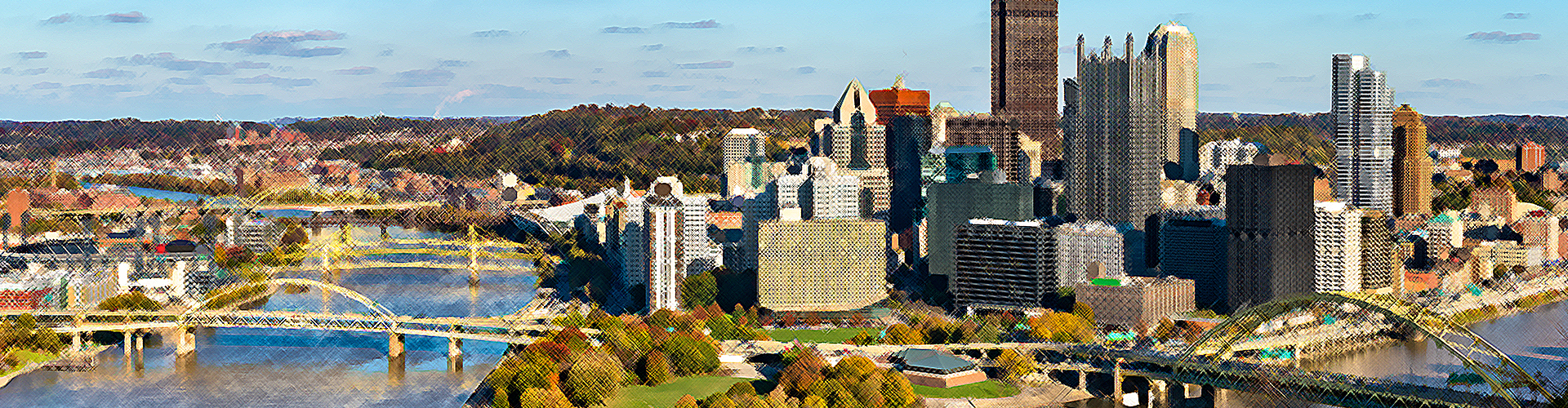
CANONSBURG, PA. — Thirty years ago, Jason Capps was a young man with ambition, but when he looked around this town near Pittsburgh, where he grew up, all he saw were opportunities slipping away. The coal mines where his father worked were dying; the glass, steel and manufacturing industries were on their last legs.

In 1987, when Capps graduated from high school, the unemployment rate was at a staggering 12 percent.

“My ability to carve out a future here was limited at best, impossible at worst,” he said. “So I left.”

Capps, 51, became a chef and traveled the country honing his skills. But then an unexpected rebirth happened here in Western Pennsylvania with the discovery of the Marcellus Shale, an ancient rock bed that offers an abundant source of natural gas.

Eventually, Capps moved back to his hometown and, in 2006, he founded Bella Sera — a successful event space resembling a grand Tuscan villa — which he still owns and operates.

Deiuliis Announces Formation of Mentorship Academy to Support Local, Disadvantaged Youth

(Pittsburgh, PA.) – Today, Nick Deiuliis announced the launch of an Academy focused on providing mentorship and access to greater opportunities for urban and rural youth within economically disadvantaged communities in western Pennsylvania. The Academy will help fill gaps that are leaving wide swaths of the regional population behind and discouraging access to middle-class, family-sustaining careers.

The Academy’s mission is to develop a community of young, socio-economically diverse leaders and provide them an actionable path to a life well lived and family-sustaining career opportunities in the bedrock industries of energy, manufacturing, and small business. The Academy will assist young individuals in building life skills and provide a network of supporters to help them navigate through their personal journeys.

The first class will consist of 12 high school juniors or seniors. Six will be from urban school districts in economically disadvantaged communities and six will be from rural school districts in economically disadvantaged areas (no more than one student per high school). Students who do not plan on immediately attending college will be targeted for inclusion in the program. The Academy will be constructed to encourage interaction and relationship building across young individuals who, due to diverse backgrounds, would not typically have the opportunity to meet one another.

Upon program completion, the Academy will keep in close contact with prior students and continue to mentor and assist them over time. The Academy syllabus and schedule will be posted online at nickdeiuliis.com, as well as a portal to submit nominations for attendees.

The Academy will meet for a full day each month, with a deep dive into a chosen topic and a site/field visit each session. Prep assignments will be set prior to each meeting. Planned topics include leadership, teamwork, developing a career path, good life choices, resume creation/interviewing, household budgeting/personal investing, civics, business, and religion/philosophy. A guest speaker who is a noted local authority on the day’s topic will be scheduled for each session.

Site visits will include locations in energy development, manufacturing, construction, farming/agriculture, and retail small business. These visits will be coordinated with local companies and organizations.

Deiuliis will personally fund the Academy’s start-up and first-year operating costs. There will be no cost to attending students. Initial Academy partners include CNX Resources Corporation, The Bus Stops Here Foundation, and the Builders Guild of Western Pennsylvania. Additional partners will be added as the Academy calendar and program are built. Launch is planned for Summer 2021.

By the end of the annual Academy program, each student will have developed lasting relationships with their fellow students, an influential network of local leaders as supporters and resources, and a more rounded understanding of the wider region’s opportunities and strengths. Academy graduates will be asked to serve as young mentors for future students entering the academy in subsequent years.

“The next generation of our region in economically challenged communities is losing its path to the middle class, and the challenges start with education and opportunity awareness,” Deiuliis said. “These high school students are often not informed of attractive career opportunities in the region and may lack mentors to help navigate career and life decisions. That is especially true for students not going to college immediately after high school.”

“Leaders in our region who function in the real world of tangible accountability can provide guidance to young adults entering the workforce—that’s what the Academy is all about,” Deiuliis added.

Individuals and organizations interested in participating as a speaker or serving as a host are encouraged to contact academy@nickdeiuliis.com or use the form at nickdeiuliis.com/contact.

PCN “On the Issues” Interview – Feb 11, 2021

Nick joined the Pennsylvania Cable Network (PCN) for an “On the Issues” interview on Feb. 11, 2021. Nick discussed a range of issues, including the economic impact of the natural gas industry, natural gas pricing, the environmental benefits of greater natural gas utilization, federal and state energy policy, and much more.

A Rational Person’s Guide to Climate Change

The great Tom Wolfe astutely defined a cult as a religion with no political power. Wolfe’s observation resonates today when it comes to climate change. What was once a cult has now become the official religion of academia, government bureaucracy, rent-seeking corporations, and the Left. Just like Galileo who dared to challenge the Catholic Church’s official scientific consensus of the sun revolving around the Earth, those brave enough to question aspects of the climate change credo are immediately labeled as deniers, akin to heretics in the temple, risking banishment.

The primary challenge with rationally assessing the topic of climate change is that a very complex set of discrete issues has been boiled down to a neat, simple, universal, and erroneous view of political convenience. For a rational person to seriously reason through climate change issues, one must unpackage the singular, simple rhetoric into component pieces that, once properly assessed and sequenced, can build views anchored in science, data, and fact.

Query #1: Is climate change occurring?

Undoubtedly, the answer is ‘yes.’ Climate change has been a reality since Earth had a climate. Warming periods, cooling periods, Ice Ages, and widespread droughts have been occurring for millions of years and before humans appeared on the scene. Global climate change and trends in regional climates have been, and will remain, a reality.

Query #2: Can future climate change and its effects be accurately modeled?

Attempts to accurately predict climate have been abject failures. If the poor success rates of climate modelers were posted by a surgeon, attorney, or professional sports coach, all would be fired for incompetence. The failure is not from lack of effort or poor scientific acumen, although Climategate exposed how some in the racket of subsidy and government largesse are more than willing to play fast and loose with the scientific method.

The reason models have proven unreliable is they are attempting to simulate and predict the most complex fluid flow system ever: global climate.

The most advanced tools and techniques in meteorology struggle to accurately predict a hurricane path three days out, whether it is going to snow next week, and if the upcoming summer will be unusually hot or mild. What makes one think we would be able to accurately predict global temperatures fifty years out?

Anyone who states models can accurately predict future climate metrics (temperature, storm severity, etc.) is either uninformed or has a hidden agenda.

Query #3: Is human activity increasing the global carbon dioxide level?

Like our first question, the answer here is clearly, ‘yes.’ We know with certainty that since mankind harnessed the power of the carbon atom, atmospheric carbon dioxide levels increased from about 200 parts-per-million (ppm) to about 400 ppm. Carbon dioxide levels in the atmosphere will continue to grow as nations and economies further develop. Coincidentally, we should celebrate the rise in carbon dioxide levels because it brought higher life expectancies, lower infant mortality rates, and improved individual rights for billions of people. Carbon has driven, and continues to drive, quality of life on the third rock from the sun.

Query #4: Are increased carbon dioxide concentrations materially impacting the climate and global temperature?

This is the question that is least understood by the public and is most suspect to distortion and abuse by the leaders of the religion. The key phrase here is ‘parts per million,’ or ppm. People don’t understand the context of 200 ppm doubling to 400 ppm, because they have been instructed for decades to exclusively focus on the 200 and the 400, and to ignore the ‘ppm.’ A helpful analogy will illustrate the flaw in ignoring the ‘ppm’ part.

Imagine a Pennsylvania college football stadium that holds 100,000 fans on gameday when Penn State is playing Ohio State (sadly, it’s hard to picture that in the age of pandemic). A 200-ppm level of Ohio State fans (carbon dioxide) in the crowd of 100,000 (atmosphere) would be equivalent to 20 fans wearing Ohio State jerseys versus 99,980 wearing Penn State jerseys. If the concentration of Ohio State fans in the crowd doubled to 400 ppm, it would mean the number of fans wearing Ohio State gear went from 20 to 40, and the number of fans wearing Nittany Lion gear declined from 99,980 to 99,960. Clearly, the nature of that crowd did not change in any material sense, despite the concentration of Ohio State fans doubling.

A doubling of trace amounts of atmospheric carbon dioxide, measured in the parts per million and over hundreds of years since the Industrial Revolution, is not going to materially change climate or global temperature. Instead, it is going to have a very small, perhaps unmeasurable, impact on climate. Climate change is a reality. But simple math shows increases in trace levels of carbon dioxide, from 0.02% (200 ppm) to 0.04% (400 ppm) of the atmosphere, due to human industry and energy consumption are not the major, rate-setting driver.

Query #5: Are wind and solar renewable forms of energy?

It’s an article of faith in the climate change religion that renewable energy exists, it is the global savior from climate change, and it is best exemplified by windmills and solar panels. Such beliefs defy science and reality. Laws of thermodynamics instruct us that there is no form of truly renewable energy. Worse yet, windmills and solar panels as forms of electricity generation at scale represent massive carbon footprints that likely exceed the carbon footprint of natural gas-derived electricity. Life-cycle visualization of what it takes for renewables to provide electricity at scale helps illustrate the reality.

If, say, western Pennsylvania needed to add 650 MW of baseload electricity generation, doing so with windmills would have a massive life-cycle carbon footprint.

  • Nearly 300 large turbines/towers would be needed for a capacity of 650 MW (compared to a compact combined cycle array for natural gas).
  • The materials needed to construct the wind turbines must be mined and processed, likely in places like Mongolia where the resources are located, using carbon to do so while massively scarring the surface where the deposits are.
  • The components must be constructed, likely in places like China, in factories powered by carbon. The components then need shipped here, using carbon to power the trains, vessels, trucks, and planes.
  • Windmills in places like Pennsylvania only work on ridge lines, meaning wide swaths of trees must be felled to clear pads and right of ways for transmission lines, resulting in visible scars on scenic areas and another big contribution to carbon footprint.
  • Concrete must be poured for pads and miles of new transmission lines must be run to link the hundreds of turbines to the grid, consuming yet more carbon.

Finally, you need backup generation for when the wind is not blowing, which is most likely going to be carbon-based natural gas or coal. To top it off, much of this cycle needs repeated in about seven years when the turbines need replaced due to age (turbine disposal has its own carbon footprint).

A legitimate scoring of the life-cycle carbon ledger for wind shows it can suffer a much larger carbon footprint than natural gas-fired generation. The same conclusion would hold for solar, perhaps worse in places like Pennsylvania since the sun doesn’t shine as much as the wind blows.

Be wary of those who tout renewable energy and how the carbon footprints of wind and solar are zero, or close to it. Most likely they are angling for subsidies or political favor. They are not speaking from a position of scientific authority.

Query #6: Is climate change the biggest threat facing us today?

Climate change, whether caused by rising carbon dioxide concentrations in the atmosphere or not, is always going to pose a risk to human health. Hurricanes destroy and drought kills. Mother Nature for millennia has proven to be a force to be reckoned with. But climate change is not even close to the top threats to our quality of life today.

Disease, as the past year of pandemic has demonstrated, is a much bigger threat to humans. Violent crime, particularly in large cities, is a bigger risk to urbanites than what the polar ice caps are doing. Corrupt government, the rise of socialism, and a broken public education system should worry Americans more than rising sea levels. Young adults in the developed world face a bigger safety risk from driving than climate change while young adults in the developing world are more at risk from contaminated water than carbon dioxide. Whatever twists and turns the climate may take over the years, have confidence that technology will allow humans to adapt to it.

Final query: What to think?

There are discrete issues that converge into the climate change discussion. The unpackaging of the cult/religion credo reveals logic and truth. Climate change has always and will always occur. Models forecasting the complexity of future climate have proven to be inaccurate.

Human activity since the Industrial Revolution has doubled carbon dioxide atmospheric concentration and may continue to increase it. However, the level of carbon dioxide in the atmosphere is a trace amount, and its doubling over the past couple hundred years has not materially altered the climate.

There is no such thing as truly renewable energy. Wind and solar power are incredibly carbon intensive forms of electricity generation when an honest life-cycle assessment is performed. Although climate always will have the potential to harm or kill, there are much larger and more looming threats to the human condition at our doorstep today.

The Latin origin of the word ‘science’ derives from ‘knowledge.’ History’s greatest scientists did not trust other scientists; the scientific method and human progress rely on healthy skepticism of the scientific consensus. Don’t fear being labeled a denier, called a skeptic, or challenging the scientific/political consensus. Think of Galileo, Einstein, and Curie.

The Good, the Bad, and the Ugly of ESG

Today businesses, markets, and investors are increasingly obsessed with the environmental, social, and governance (ESG) arena.

Public companies trumpet ESG credibility, investment firms are unveiling ESG products at dizzying rates, and investors are constantly being told it is a moral imperative to invest in ESG products. Human nature attracts us to embrace ESG as a virtue. Yet media, environmental groups, academia, and Wall Street firms adore ESG, which is a sure tip-off to its potential hazards.

ESG presents a conundrum: is it “doing well by doing good” or instead does it stand for “enabling stakeholder graft”? With trillions of dollars at stake, the conundrum warrants an honest and fair assessment. Cue the Ennio Morricone soundtrack, because the ESG craze has components that are good (Blondie), bad (Angel Eyes), and outright ugly (Tuco).

The Good (Blondies)

Let’s be unequivocally clear: ESG focus for individual companies, particularly ones that operate in environments with risk, can be an effective tool to garner market recognition, reduce risk, and create value.

The key to ESG effectiveness is transparently laying out performance and targets for tangible and measurable metrics that correlate to the E, S, or G. This sounds obvious, but is unfortunately a rare thing in the world of public companies.

To illustrate, take a natural gas company operating in Appalachia. Effective ESG management would include:

  • a percent reduction in annual fresh water usage that can be measured year-on-year (falling under E);
  • a defined portion of annual spend or employee hires that hail from economically disadvantaged communities within the stated geographic operational footprint of the firm that can be itemized year-on-year (covering the S); and,
  • straightforward reporting of how stock ownership has grown in magnitude and tenure for directors and executives over time (addressing the G).

Add to these three examples similar metrics and you start to see how ESG can be utilized by companies across a range of industries to clearly express performance in risk management, long term value creation, and across stakeholder groups. By the way, a key to effective ESG management is that companies don’t just report how they performed for the prior year across these metrics, but also their near-term targets (as in the next few years, not twenty years out). State a standard that can be tracked, and then deliver actions and performance that back it up.

The Bad (Angel Eyes)

Although it may be politically incorrect to say so, the truth is much of the ESG complex has become a racket. Investors are being duped on a grand scale while certain corporations and investment firms obfuscate and make a killing, respectively.

Let’s start with ESG shenanigans in corporate America.

Beware whenever you hear a company making a big splash about an unmeasurable and opaque target well into the distant future. Take the multi-billion-dollar industrial or energy firm committing to “net zero carbon” in some far-in-the-distant year when much of the current executive team and board will likely not be alive. No one knows how such a metric is calculated and if the path to zero carbon is even scientifically viable (it’s not). Plus, the target date is set so no one running their mouths today are accountable for seeing it through.

Companies that engage is this type of PR stunt increasingly risk violation of SEC regulations dealing with false and misleading statements. If these executives said something similarly baseless about future cash flow or net income aspirations, they would need a criminal defense attorney. But if it falls in the squishy world of ESG, it not only receives a pass but is applauded, even when such ESG talk is becoming more and more material to capital markets.

Worst of all, corporate titans waxing poetic at Davos about how their companies are going to be net carbon zero by 2050 often corelates to poor ESG performance today.

Undefined, non-measurable targets decades in the future provide cover to shift attention from the troubling, tangible, and harsh realities of right now. You see it everywhere.

Amazon talks about its fleet going electric by 2035 while today it imposes harsh labor practices on its employees and contributes to deforestation with ubiquitous use of cardboard. Apple harps how it will be net carbon zero in coming years while its supply chain relies on an oppressive Chinese state that squashes human rights and its FoxConn contractor installs nets around its facilities to prevent exhausted workers from committing suicide. Patagonia brags about its refusal to sell its apparel to financial institutions that invest in the fossil fuel industry, yet its products are carbon-derived and its murky supply chain is traced to third world epicenters known for sweat shops.

Then there is the investment firm looking to use ESG as a convenient vehicle to shove high-fee products down the throats of everyone, from mom-and-pop investors to multi-billion-dollar pension funds.

Wall Street is creating new ESG funds and products at the rate of trillions of dollars each year. Investment firms seeking to lure well-intentioned investors can mislead by touting how their high-fee ESG-focused funds beat traditional portfolios. However, reality shows many ESG funds struggle to match the performance of simple, low-fee index funds on a consistent basis. Be wary of firms rolling out ESG-friendly titled funds with no meaningful difference in their holdings compared to non-ESG funds, conning guilt-ridden investors in a multi-billion-dollar charade of wordsmithing and subpar returns.

Finally, there are the massive institutional investors, such as index funds and pensions, demanding that public companies they invest in meet ESG criteria. The demanding institutions hold shares in hundreds, perhaps thousands, of public companies all over the map and in every imaginable industry. Such institutions realize the influence they hold over public companies and want to do the right thing by using their influence to promote the worthy aspects of ESG.

Not surprisingly, many of these large institutional investors desire an easy and efficient way to screen ESG performance across their huge portfolios. They rely heavily on global frameworks and reporting mechanisms that claim to universally define good ESG behavior—therein lies the flaw.

Delivering and assessing effective ESG performance requires sweating numerous details unique to individual companies and industries. It is not a one-size-fits-all approach set by a static spreadsheet, designed by people who never worked in the trenches of the industries they judge; instead it is hard work requiring specialized knowledge of an industry or company.

The mammoth institutional investor may have the benefit of a glossy and sleek report touting its ESG veneer, but it won’t have the substantive ESG wisdom that reduces investment risk and boosts returns for their clients and beneficiaries. Often the application of these blunt tools for assessing ESG performance frustrates the worthy aspirations of the institutional investor.

The Ugly (Tucos)

Prolonged immersion in the bad of ESG leads to the ugly, as exemplified by the demise of Pacific Gas and Electric (PG&E) and WeWork.

For years, PG&E racked up ESG accolades from self-proclaimed ESG experts. Sustainalytics.com deemed the California utility an ESG outperformer, Corporate Responsibility magazine’s 100 Best Corporate Citizens ranked PG&E as the top utility in the nation, and Newsweek’s Green Rankings also placed PG&E at the top of the utility heap. The company boasted that over a third of its power came from renewables, which helped deliver a string of best-possible governance ratings from Institutional Shareholder Services (ISS). PG&E was the belle of the ESG ball, yet also severely dysfunctional.

The utility’s rap sheet over the past twenty years includes convictions for over 700 misdemeanors and felony convictions stemming from misleading regulators and the public about the state of a gas pipeline that ruptured and killed eight people. PG&E made attorney Erin Brockovich a Hollywood movie sensation when she represented clients who were eventually awarded over $600 million from PG&E stemming from contaminated drinking water. From 2012 to 2016 PG&E supervisors looked the other way as employees fabricated thousands of on-time results to hit internal targets for responding to excavation work around buried power and gas lines, accumulating over 170,000 violations of state law. Clearly, this was not a best-in-class track record for E, S, or G.

Then, in 2017 and 2018, wildfires raged across California and it was determined that over 1,500 fires, several of them catastrophic, were caused by PG&E’s poor maintenance practices, deferred safety upgrades, slow responsiveness, and obsolete equipment. More than a hundred lives were lost. Twenty-two thousand buildings were destroyed across 350,000 scorched acres. A company audit months after the fires found nearly 10,000 problems with power lines throughout its system. Before you knew it, the utility was facing tens of billions of dollars in liability. PG&E’s system is now subject to frequent rolling blackouts, delivering a third-world power grid to ratepayers. PG&E filed for bankruptcy, bringing home the reality of wiped-out investors despite all those shiny yet hollow ESG credentials.

The case of WeWork offers another cautionary lesson. The office space tech darling (at least for a period of time) boasted a $47 billion valuation in early 2019 and possessed one of the savviest investment firms on the planet as a major owner: SoftBank. WeWork was as ESG friendly as it gets, at least on the surface. The company’s founder and initial CEO, Adam Neumann, constantly spouted a potpourri of ESG missives including how WeWork “advances inclusion and equity in the global economy,” wanted “to build a world where no one feels alone,” and existed “to elevate the world’s consciousness.”

When the company was deciding which stock exchange to list its shares on before its planned IPO, Neumann sat the CEOs of NYSE and NASDAQ down to ask which one would ban meat and plastic in the exchanges’ cafeterias. Such a ban would curry favor with WeWork and land the exchange the coveted stock listing. NASDAQ practiced one-upmanship by committing to create a We50 index of companies practicing sustainability and won the listing.

Not before long, NASDAQ and SoftBank looked foolish as WeWork’s substantial financial woes and its CEO’s problematic public behavior peeled away the thin ESG veneer to expose a stark reality. Valuation plummeted from $47 billion to less than $8 billion, Neumann was ousted as CEO, the IPO was canceled, the company had to be bailed out by SoftBank to avoid ruin, and a reorganization to cut costs could not be effectuated because the company was in such dire financial straits it could not afford to pay severance. That’s what happens when public company governance behind the ESG posing is a nightmare of reality.

Finding the Blondies While Avoiding the Angel Eyes and Tucos of the Capital Markets

Effective ESG performance and assessment can help companies and investors competitively pursue profit in a capitalistic society. But beware the unscrupulous looking to lure capital or the naïve looking to ride moral high horses who abuse and misapply ESG for counterproductive designs. The quick and easy approach to ESG is a tempting mirage of sugary nothingness. Real ESG takes grueling work and endless effort; an infinite pursuit of perfection where the lucky capture it for only brief periods yet prevail over the long haul.

Further Reading

See the study “Valuing ESG: Doing Good or Sounding Good?” by Professors Bradford Cornell and Aswath Damodaran.