Years, Numbers, and Consistency

Far Middle episode 151 features a series of topics connected by the theme of “by the numbers, through the years, and through the lens of consistency.”

That theme begins with the installment’s sports dedication honoring Bill “Wink” Winkenbach. Transforming the way fans watch and follow sports today, Winkenbach invented fantasy football in 1962. Nick looks at fantasy football’s growth, by the numbers and through the years, these past six decades.

While Winkenbach was laying the foundation for modern fantasy sports in the 1960s, the Eisenhower administration would start counting the number of foreign nationals “apprehended” or “encountered” when crossing into the U.S. over the southern border. Nick proceeds to examine the immigration crisis by the numbers and through the years to present day.

“Being part of a family who got its start here in America through immigration, I always lean toward being pro-immigration, but under, of course, reasonably defined sets of rules and criteria,” says Nick. “And that is far from what we have today… over the past three years, there’s a total of about ten million unauthorized, undocumented immigrants that have entered the United States…By the numbers on the immigration crisis should freak all of us out.”

From the sobering and shocking data on America’s immigration crisis, Nick switches gears to World War II and the shocking tally of how many Soviet troops were killed by Stalin in conjunction with his ‘Not a Step Back’ order. Nick suggests a range of 300,000 to 900,000 Soviet troops were killed by their own government and fellow soldiers.

Fantasy sports, the immigration crisis, and the Soviets killing their own troops—they reveal the importance of consistency and the danger of inconsistency. This leads to a discussion between the inconsistency of how former President Trump and President Biden were respectively charged and not charged for retaining classified documents.

“Rules are rules,” says Nick. “When you break them, account for them. When you enforce them, do so consistently. To do otherwise is asking for trouble, both politically and culturally.”

Continuing his focus on Washington, D.C., Nick shifts to the Inflation Reduction Act and specifically the Act’s sections to jumpstart the hydrogen economy. Nick explains the unique opportunity of coal mine methane (CMM) as a hydrogen feedstock and highlights the recent co-authored editorial, “Seizing Western Pa.’s unique hydrogen opportunity.”

In the editorial by Matt Smith, Darrin Kelly, and Greg Bernarding, they write, “If properly enabled and maximized, CMM-based hydrogen production will be able to create over 696,000 jobs in the Pittsburgh region over the next two decades and infuse over $213 billion into the regional economy. We have identified over 30 unique projects, each with the potential to create close to 20,000 jobs.”

Key to unlocking the economic and environmental benefits of these projects is the U.S. Treasury Department.

Nick explains the Department “needs to finalize the 45V hydrogen production tax credits within the IRA. That’s consistent with what the law intended. And that will facilitate a significant climate positive set of actions and impacts when it comes to fugitive methane’s beneficial use. If you do that, it aligns with the original congressional intent. And it also aligns with President Biden’s signature on the IRA. And it follows the process defined by the good old Constitution. What a thought.”

In closing, Nick looks at the past century of electric vehicle history, by the numbers and through the years, and through a consistent lens.

The Far Middle Journey

Marking the milestone 150th episode of The Far Middle, Nick reflects on the podcast’s nearly three-year journey and inspiration from Dr. James Burke’s “Connections” series.

“With such a prominent episode number, we need a compelling sports dedication, one that sits atop the greats, as a great of greats, and one that epitomizes and embraces the attributes of doing, achieving, hard work, and being rational,” says Nick, presenting the honor to Gordie Howe, aka “Mr. Hockey.”

After reviewing Howe’s legendary career, work ethic, and transformative impact, Nick connects to The Far Middle’s impact on helping foster civil discourse and the importance of expressing diverse opinions.

Looking back on the history of The Far Middle, Nick describes his philosophy on strategic thinking akin to that of a chess player, versus a checkers player’s mentality. However, the podcast’s beginnings resembled more of a checkers style before evolving into that of a chess player’s approach. He explains that each Far Middle episode is distinctly unique, with no two episodes exactly alike, yet all 150 episodes tie together a handful of core themes consistently and uniquely connected.

“Strangely enough, applying a checkers player’s mindset over the years helped me to become better at applying the chess player’s mindset when thinking ahead,” says Nick. “It’s one of life’s interesting ironies.”

Next, Nick references Ayn Rand’s essay, “Who Will Protect Us from Our Protectors?”, in discussing a core theme of The Far Middle, which is the state justifying control of the individual under the cover of looking after the helpless individual’s best interests or the public good. “The state is promoted as the protector for the individual, the little guy’s shield,” says Nick. “But who then protects the individual from the out-of-control protector when that protector explodes in size and scope?”

The episode delves into the Founding Fathers’ vision of limited government and individual sovereignty, contrasting it with the growth of bureaucratic control. Drawing parallels to Orwell’s “1984” and Huxley’s “Brave New World,” Nick warns against the dangers of state manipulation and the erosion of individual freedoms.

In closing, Nick reaffirms his commitment to advocating for individual liberty and civil discourse as The Far Middle journey continues.

Manipulation

The Far Middle episode 149 explores various forms of manipulation across society, spanning government, finance, electric vehicles, real estate, and more.

In one of The Far Middle’s more unique sports dedications, the episode highlights an unlikely honoree: Arnold “The Brain” Rothstein. Nick explains that while the manipulative Rothstein didn’t excel in professional sports as a player or coach, his infamous role in fixing the 1919 World Series (which he denied) would transcend the sports world.

Beginning this installment’s connections, Nick transitions to the evolution of the International Energy Agency (IEA). The agency “has succumbed to ideological pressures from the Left, the radical environmental movement, and the code red crowd,” says Nick. Those interests have skewed IEA’s demand forecast for global oil and natural gas use, and they then use that manipulated data as evidence there isn’t a need for further oil and natural gas investment. The argument is then parlayed into energy policy decisions, such as the Biden administration’s pause on new U.S. liquefied natural gas export facilities.

Revisiting prior episode 148, “Fields of Resistance,” Nick highlights the German government’s budget manipulation attempts that ultimately sparked the German farmer protests.

“Manipulation by government is not unique to Europe,” says Nick. “Our government here in the United States is fully capable of manipulation of its own.” This leads to a conversation about the U.S. EPA’s vehicle emissions rule, which is a de facto EV mandate. Nick reviews a paper by Paul Bonifas and Tim Considine, “Analyzing the EV Rule,” which finds, “The EPA’s EV rule would cost the U.S. economy and taxpayers $1,407 billion, an underestimation of $3,007 billion.”

Next up is a topic familiar to readers of Precipice, which is the magnitude of public pension underfunding. Examining state and local government unfunded pension obligations, Nick references a Hoover Institution analysis that, “As of fiscal year 2021, the total reported unfunded liabilities of [state and local government pension] plans is $1.076 trillion. In contrast, the market value of the unfunded liability is approximately $6.501 trillion.”

Switching from the public sector, Nick explains the manipulative tactics housed in the commercial real estate market to raise property values artificially.

Perhaps one of the biggest manipulators is the Federal Reserve, which “has set interest rates far below normal for decades resulting in negative real interest rates, and such monetary manipulation has massive ramifications across society, much of them negative,” says Nick.

In closing, Nick questions the absence of the media and journalism who, by not calling out the manipulations discussed, are a willing accomplice by reporting opinions and the image rather than facts and the truth.

As episode 149 reaches twilight time, Nick pays tribute to what might be the greatest song in rock and roll history about manipulation.

Fields of Resistance

Far Middle episode 148 arrives at a special time: March Madness is here, spring has sprung, and America is celebrating National Agriculture Week.

At this time of renewal, farming is the featured theme and focus. Nick begins in “heaven,” aka Iowa, for this episode’s sports dedication, which goes to “the Heater from Van Meter”, Hall of Fame pitcher Bob Feller.

While Felller eventually landed in Cooperstown, his stretch to more than 2,500 Major League strikeouts began with playing American Legion ball in Iowa, with Nile Kinnick behind the plate. Learn more about Heisman Trophy winner Nile Kinnick in The Far Middle episode 138, “The Truth of the Matter.”

Bob Feller, who grew up on a family farm, plants the seed for this episode’s examination of the roots of American farmer activism in the late 19th century and the parallels to Europe today. Nick discusses the recent surge of farmer protests across several European countries, from Ireland to Romania. The conversation further explores Nick’s recent commentary, “Harvesting History: Farmer Activism is Democracy’s Early Warning System.

In this episode, Nick offers both an American agriculture history lesson and an update on current issues and strife affecting European farmers. Learn how and why climate change policies are the singular root cause of today’s European farmer protests, and why other so-called causes are simply associated symptoms of those climate policies.

“Farmers matter greatly in society—let’s not mess with them,” says Nick. “They’re one of America’s great value creator classes—amongst creators, enablers, and servers—making society function, as I wrote in Precipice. Unfortunately, farmers are finding themselves under attack with this ever-pressing value appropriation by what might some call the takers, and that I reference in Precipice as the Leech.”

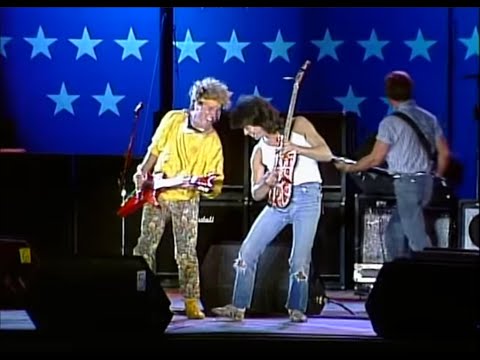
In closing, Nick wraps with a fitting look back at the first Farm Aid concert. Now nearly 40 years ago, Nick pays tribute to Eddie Van Halen and Sammy Hagar’s first performance together on stage.

The Struggle Between Liberty and Authority

The Far Middle episode 147 begins with an only-in-America connection as Nick presents the unique link between U.S. Senator Rand Paul and the installment’s sports dedication, Hall of Fame baseball pitcher Jim Bunning. Nick discusses Bunning’s accomplishments on the diamond that took him to Cooperstown, as well as his post-baseball career that took him to the United States Congress.

“It’s another sports dedication that isn’t so much about sport as it is about the unique journeys and opportunities that present themselves in America,” says Nick.

The conversation then transitions into a discussion of John Stuart Mill’s “On Liberty,” Mill’s formative essay on individual freedom and the role of government in society. Nick’s commentary extends from and expands upon his recent article, “Revisiting On Liberty: Magnificent Guide in Troubling Times.”

Nick explores many themes from Mill’s 1859 masterpiece, such as the importance of protecting individual rights from societal and governmental coercion, the dangers of suppressing dissenting opinions, and the need for tolerance of nonconformity. Nick draws connections to present day issues, such as vaccine mandates, censorship on social media, and ideological polarization.

Regarding that polarization and today’s thought police, Nick notes that “Mill pointed out that society benefits from genius, but genius, it requires individuality and freedom. Everyone appreciates a genius in art. So, when some musical or literary genius comes on the scene, everybody loves that. But the same people often disdain contemporary genius that disrupts political, economic, religious, or scientific status quo and power. It’s quite inconsistent.”

In the closing lines of On Liberty, Mill writes, “The worth of a State, in the long run, is the worth of the individuals composing it…a State which dwarfs its men, in order that they may be more docile instruments in its hands even for beneficial purposes, will find that with small men no great thing can really be accomplished.” Nick contends that the individual is going to have to reign once again supreme in the U.S. if we want to secure a bright future.

Concluding the episode, Nick connects back to 1859, the publication year of On Liberty, to reflect on another milestone that year. And that breakthrough event took place in Titusville, Pa., where Edwin Drake struck oil giving birth to America’s oil industry.