Killing the Planet…One Beer and Burger at a Time???

Environmental zealotry surrounding climate change and carbon footprints constantly reminds us of the difference between, or perhaps the mutually exclusivity of, book smarts and common sense. When it comes to academia’s rapture with environmentalism, all too often the presence of book smarts inevitably means the absence of common sense.

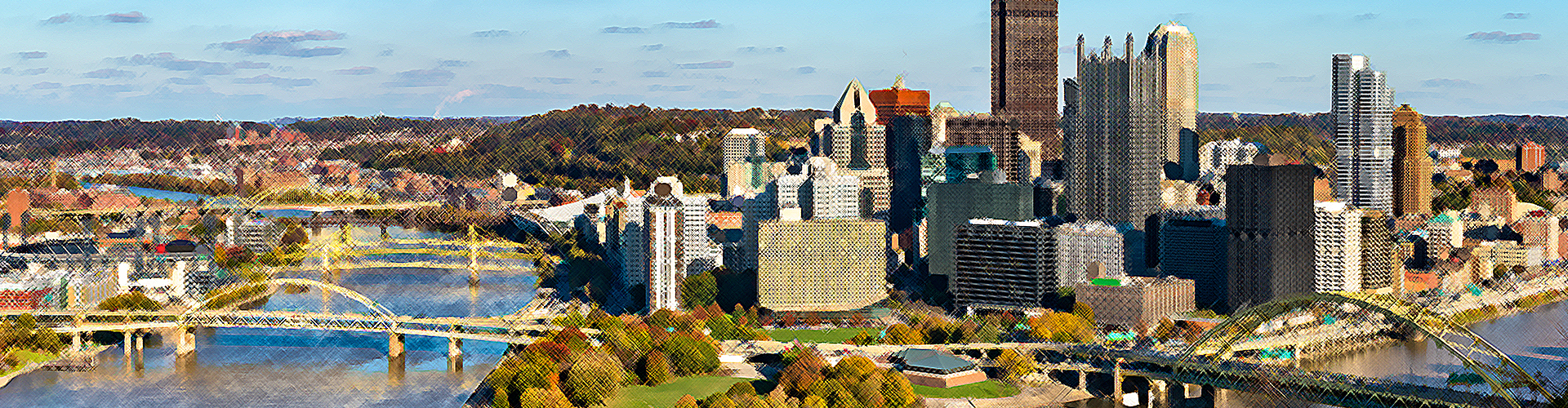
We were served up another helping of this phenomenon when Carnegie Mellon University (CMU) issued a report last year assessing the carbon footprint of food consumption in Pittsburgh and Allegheny County. Not surprisingly, the CMU team concluded that the region’s food consumption carries a massive carbon footprint.

Local media and academia, densely populated with self-proclaimed enlightened eco-warriors, found the report’s conclusions shocking. Yet normal folks in western Pennsylvania upon hearing of the conclusions shrugged their shoulders and replied with a, “well, yeah.”

The Report’s Findings

The CMU team did a nice job itemizing the carbon footprint for each step of the food distribution supply chain: production, packaging, transportation, refrigeration, and even landfilling of waste. When you add up the greenhouse gas emissions on a carbon dioxide-equivalent basis for each link of the food supply chain, the total is quite large.

That footprint is 3.7 million tons of carbon dioxide-equivalent for Allegheny County, to be exact. Pittsburgh’s home county stamps a bigger carbon footprint for its food consumption than the yearly emissions from the generation of electricity needed to power every household in the county. Yep, that’s right: the greater Pittsburgh area’s food consumption emits more carbon dioxide-equivalent than fossil fuel used to power our homes.

The county’s food system carbon footprint works out to 3.1 tons of carbon dioxide-equivalent per person. That is the same footprint as each person driving a car 7,600 miles. Turns out what we all knew – every single person who enjoys a high standard of living is guilty of a massive carbon footprint.

The study tagged two food types as particularly egregious when it comes to carbon footprint: beer and beef. These two bad boys seem to be the food equivalents of oil sands in energy production and private jet travel in transportation.

Refrigeration of food was one of the biggest logistical contributors to the food supply chain carbon footprint. Meaning ice cream is a menace of carbon excess on par with mc-mansions in housing.

Call to Action!

Knowledge is power. Something must be done before it’s too late. Get John Kerry here now – fire up his private jet. Now that Allegheny County’s politicians, bureaucrats, and academics are enlightened with the CMU study findings, we should expect the following:

  • Pittsburgh City Council banned fracking within city limits a few years back and received a standing ovation. Council sees climate change as a much bigger threat to the Steel City than the city’s broken finances, undrinkable public water, the pandemic, a public school system that can’t teach kids basic skills, dying small businesses felled by the government-mandated shutdown, and infrastructure so broken that downtown streets collapse in the middle of rush hour and swallow buses. So, the illuminated council sages should now vote unanimously to permanently close, right after council allows them to reopen at normal capacity, all restaurants being tone-deaf enough to serve hamburger or steak.
  • The NHL has trumpeted its commitment to fight climate change, fearing the disappearance of pond ice that will kill the game. Effective immediately…no wait, effective once fans are allowed to attend games again…beer sales in all hockey arenas (including ours) will be banned. While the NHL is at it, why not stop selling all cold drinks and offer only free water at fountains in the concourses, but only if you bring your own reusable cup?
  • Students at regional universities have held sit-ins and protests to demand their school endowments divest of fossil fuel investments, in the name of socially conscious investing driving the rescue of our planet from climate change doom. Let’s get these eco-warrior, brittle future leaders to immediately commit to cutting their personal caloric intake by 50% for the rest of their carbon-consuming, guilt-ridden lives. A commitment to do so must be accompanied by a daily reporting surveillance app so that the interests of transparency are served, and new bureaucracy can be created to manage the caloric reporting.
  • Those same universities have signed carbon reduction pledges. Now that we know eating is an environmental sin, should we not expect higher education administrators to demand faculty sign a legally-binding commitment that the professor will not engage in the consumption of beef or beer and will hold daily caloric intake to under 1,500? In the event a faculty member is found to have violated the agreement (say, by eating meatloaf or being seen in a bar), immediate contact tracing should be employed to catch other faculty who witnessed the transgression and did not report it. Breach of contract results in revoking of tenure for the repulsive gastronome.
  • The big grocery chains in Allegheny County publicly trumpet their commitment to fight climate change on their websites and in press releases. Thus, with the CMU study results now out for all to see, we should expect each of these big chains to immediately stop the sale of that weapon of climate mass destruction: ice cream. We might also expect them to cease selling all refrigerated foods and offer only foodstuffs that don’t require climate control. I knew spam was making a comeback!
  • Both county and city government (yes, here in western Pennsylvania we seem to need redundant bureaucracy to protect us from ourselves, so we are told by the elite) follow the inane herd of the coasts and broadcast their resolute commitment to net zero carbon activity by some date in the far future using the cloudy math of net offsets. Therefore, we should see soon a joint resolution where all Pittsburgh and Allegheny County government offices, buildings, and facilities will immediately ban all refrigerators, cafeterias (to deter workers from eating), and vending machines that peddle cold drinks.
  • Various banks disclose commitments to stop lending to the villains of climate change, including energy companies. Now that we know the insidious danger of farming, let’s ask these financial institutions to immediately shut off capital flows to farmers, the chemical industry (makers of fertilizers), and restaurants. If some of us starve to death, at least it will be in the name of the war to restore nature.
  • Celebrities love to cloak themselves in a woke wrapping of virtue-signaling in public (while they practice the opposite behind gated compounds in private). With CMU outing the harm being done to the ice caps by the midwestern family farm, we should expect Farm Aid to be canceled and replaced with high-profile sit-ins of county fairs across the nation’s breadbasket.

What This Means for Normal People

For those of us who don’t have the luxury of living in the cozy bubbles of elite academia, nonaccountable government, or ideologically rigid foundations, the CMU study comes as no surprise. Common sense informs the common person that carbon is a necessary and fundamental component to a good quality of life.

That holds for reliable and affordable energy, a strong job market, flexible transportation modes, and cutting-edge health care. CMU went through a lot of trouble to tell us something we already knew: that our accessible and diet-diverse food supply chain that improves our quality of life rests on the back of carbon, too.

Embrace carbon and know the reality: to be anti-carbon is to be anti-human. When the arrogant look to dictate your lifestyle options under the camouflage of saving us from climate, clap right back at them with your Klondike ice cream bar.

Think I’ll have an Iron City out of the fridge and a burger cooked with natural gas for dinner.
Hypocrisy of the Climbing Mount Everest Complex

I’ve always been drawn to mountain climbing. The allure of hiking some of the most beautiful places on Earth, the test of physical stamina, and overcoming inevitable mental challenges culminate in the irresistible opportunity to achieve.

The penultimate in mountaineering is, of course, Mount Everest in the Himalayas. Its peak stands more than 29,000 feet above sea level. The South Col and Northeast Ridge routes, the Hillary Step, the Khumbu Icefall, and Mushroom Rock are names associated with Everest that every serious mountaineer knows. Thousands of climbers have attempted to summit Everest, and sometimes the mountain wins; about 300 people have died trying to scale it (coincidentally, 80 percent of accidents on Everest occur on the way down).

Yet the allure of Everest endures because human nature does not change. Legendary British mountaineer George Mallory (who died on Everest in 1924) uttered the three most famous words in mountaineering when asked why he wanted to climb the mountain: because it’s there. Thus, Everest for decades presented the ultimate confrontation between man and nature.

But today the situation is much different. Instead of man challenging nature mano-a-mano, scaling Everest today is a carefully planned campaign where those able to shell out $50,000 enjoy a massive support team and logistical network that have the ability to literally lead the paying customer by the hand to the summit and back.

Climbing Everest today has morphed into a parody of excessive consumption, personal vainglory, and reality TV. What was once admirable and inspirational is now an embarrassing display of modern society at its worst. Much of what you see in the Climbing Mount Everest Complex echoes hypocrisy on issues prevalent in society today.

The most visible hypocrisy is acting as if scaling Everest places the climber in an isolated rapture with nature. From its base camps to its summit, today Everest resembles countless other global tourist traps during peak season. Climbers wait in traffic jams of long lines at bottlenecks along the route, resembling adult, cold weather versions of kids in line for Space Mountain in Orlando.

Those who reach the summit perform the inevitable photo shoot to hastily post on social media, much like those snapping and posting shots of themselves in front of the Mona Lisa at the Louvre or Times Square in New York. Hurry up and don’t take long, there are a hundred people behind you waiting for their turn to snap their shots. I’m guessing the selfie stick is becoming as common of a sight at the summit as the oxygen cylinder.

Another hypocrisy is that although many of the climbers undoubtedly embrace worthy concepts such as inclusiveness and human equity, the summit, and the progression to it, are not exactly an economic inclusive zone. There is more economic disparity and stratification at the summit of Everest than in Manhattan.

Most people think the biggest determinants for success in summitting Everest are physical stamina, weather, and luck. Although all three are crucial, they are not the most important determinant. That honor goes to the net worth of the climber; because if you cannot come up with over $50,000 and put your job on hold for a couple of months, you are not going to have the chance to scale Everest.

Those standing on the summit hail from the two extreme ends of the economic spectrum, the “haves” with extensive economic means and the Sherpas who make it possible for the “haves” to reach the peak.

Speaking of Sherpas, the Climbing Mount Everest Complex has yet another hypocrisy problem. Sherpas place their lives on the line to get the paying customer to the top of the mountain, not just once, but time and time again through a climbing season. Worse yet, typically Sherpas spend the most time in highly dangerous situations because they are the first responders to try to save inept, imperiled, or stranded climbers when things turn for the worst on the mountain. About a third of the total fatalities on Everest were Sherpas.

For all this risk, a Sherpa can expect compensation under $10,000 for an entire climbing season. The most crucial piece of the logistical chain to get a well-to-do climber from a developed country to the top is a worker from a developing nation paid a wage that would place him under the poverty threshold in the US. Despite being a strident advocate of the free market, something about the allocation of the economic rent across the Climbing Mount Everest Complex just doesn’t feel right to me.

The penultimate hypocrisy aspect of the Climbing Mount Everest Complex is its adherence to climate change zealotry. Key constituents in the complex, including the outfitters, climbers, gear manufacturers, and journalists, by and large subscribe to the belief that climate change is the singular, biggest threat facing mankind today. Their words, policies, and websites regurgitate the standard credos and commitments. Yet their actions grotesquely defy the words.

That’s because climbing Everest is one of the most carbon-intensive endeavors known to man. Someone needs to calculate the all-in carbon footprint on a per-summit-climber basis. The footprint includes:

  • the travel to and from the Himalayas spewing carbon dioxide;
  • the manufacturing of oxygen and the tanks storing it (a massively carbon-intensive endeavor);
  • the head-to-toe climbing gear and tents that utilize petroleum- and carbon-based materials and fibers;
  • the carbon-fueled supply chain to produce and package specialty foodstuffs; and,
  • all the mountain camps’ fossil-fueled heating sources.

You’re not getting to the top of Everest on windmills and solar panels. You’re getting there on the vital carbon atom; the very thing the Everest Complex vilifies.

Those lucky enough to summit Everest should thank the trio that made it possible: free enterprise providing the financial wherewithal to pay for the adventure, Sherpas providing the physical paths and assistance to the top and back down, and carbon providing the necessary energy and products needed to get you there and to live to tell about it. Without any of those three, today’s adventurer stands no chance to stand atop Everest.

From time to time I entertain in my head thoughts of giving Everest a go. But then two realities hit home. First, my window might have passed; the thought of dragging my old butt up Everest makes me tired. Second, I don’t want to become a willing participant in the hypocrisy. I may not end up with the money shot of the summit on the credenza, but I will sleep well knowing my actions are consistent with my beliefs.

The Premeditated Murder of the Greatest Story Never Told

The Left and the environmental movement are conspiring to destroy a multi-trillion-dollar global free market that was created by American innovation and disruptive technology.

This market is the global value chain of natural gas, with U.S. fields like the Appalachian basin fueling competitive economies everywhere. Millions of people across wide demographics will suffer life-altering consequences if the market-homicide machinations of the anti-carbon crowd are realized, with the biggest losers being the American middle class and the developing world poor.

Natural Gas 101

The U.S. went from being a net annual importer of natural gas a few years ago (as recent as 2016) to the largest global producer of natural gas and a net annual exporter today. What catalyzed this stunning rapid transformation? Innovative and disruptive technology in the form of horizontal drilling and advanced completions techniques. American ingenuity allowed methane, aka natural gas, to be liberated from shale rock deposits at prolific rates and low cost.

Unleashing abundant supplies of carbon-based energy at low cost has massive follow-on effects, from the micro to the macro. Cumulatively, the benefits across this virtuous value chain total in the trillions of dollars.

You see these benefits locally, often in rural locales.

In American gas basins, from the Appalachian to the Permian, landowners have enjoyed a windfall from gas rights leasing proceeds that they’ve reinvested into family farms, homes, kids’ education, and local businesses. Communities ravaged by global “free” (unfair) trade now see high employment in jobs that pay family-sustaining wages. The services industry in these areas, from hotels to car dealerships, enjoy steady consumer demand never before contemplated. Where no hope existed not long ago for these communities, attention has now turned to a future with promise.

You see the benefits regionally across our great land.

Pennsylvania retooled its power grid to feed off domestic natural gas and the state’s carbon dioxide intensity declined nearly 40 percent in just 12 years while its manufacturing sector is revived and businesses and homes enjoy lower energy bills. The southeast U.S. sees natural gas as an opportunity to expand its economic growth even further, and the region helps spur construction of new pipelines to transport the molecules from where they are produced to the Carolinas. Old-line manufacturing in automobiles, petrochemicals, and industrial products are resurrected across the Rust Belt by the jolt of cheap and reliable energy.

Benefits are evident across North America beyond our borders.

Ontario’s heavy industry is now fed by new pipeline infrastructure conveying Appalachian carbon-based molecules, making it more competitive and willing to invest additional capital. Mexico is the largest importer of U.S. natural gas, helping to raise the living standards for millions of its working poor. The U.S. shale industry and free market have done more for North American prosperity than the NAFTA and USMCA, combined.

America’s carbon manufacturing industry is redrawing the geopolitical map beyond North America.

Massive liquified natural gas (LNG) terminals are popping up all along the east and gulf coasts, to liquify natural gas transported from inland basins via those new pipelines. The liquified product is then loaded onto new ocean-voyaging transport ships to places like Poland, South Korea, Spain, Japan, and India. There, the natural gas is re-gasified and utilized for home heating, electricity generation, and manufacturing. Our carbon-based molecules are being utilized globally to help spur improved quality of life for billions of people.

Natural gas’ redrawing the geopolitical map broke OPEC’s back. Domestic carbon manufacturing allows the U.S. to withdraw from endless conflicts in faraway lands since we now deliver our own energy security. U.S. natural gas is the biggest strategic lever against the growing threat of the ominous Chinese communist state and its global ambitions, as well as Russia and Putin.

There are two underlying reasons why this miracle occurred in a very short time.

First, the free market was able to function without major government intervention. The industry innovated quickly and economies adjusted rapidly; bureaucrats in government couldn’t keep up to meddle.

Second, the free market allocated capital across the global value chain in a way where what were once fragmented, independent, and illiquid natural gas markets to become an integrated and liquid global market.

Before the shale revolution and cumulative capital investment, the demand for and price of natural gas in Japan had no relation on what the natural gas markets were experiencing in the U.S. Today, the value chain serves as a market stabilizer, equilibrating disconnects in supply, demand, and pricing across different regions of the map. That type of equilibrium improves the prospects of all economies and peoples of all nations, colors, creeds, and genders.

Three-Pronged Attack

Despite the undeniable and epic benefits of the American shale revolution, the natural gas industry in 2021 faces a three-pronged attack. The masterminds behind the attack seek to derail the multi-trillion-dollar value chain that was created when innovation and disruptive technology were set loose in the free market. The success of the natural gas value chain only motivates the aspiring value-destroyers more.

The first prong of attack is heightened regulatory standards on natural gas production and reduced access to natural gas reserves. You see this attack every time an administrative state bureaucrat in the EPA issues a new regulation on the industry, and increasingly the standard embodied in the regulation is at a level of performance above that of activities outside of natural gas or oil production. You also saw it on day one of the Biden presidency when he signed an executive order putting a moratorium on natural gas development on federal (i.e., our) lands. Although these attacks have a cumulative negative impact, the industry has become adept at efficiently rising to meet such onerous challenges.

The second prong of the attack targets the industry’s access to capital and looks to cut off supply of the vital lubricant for any capitalistic endeavor. This attack will be evident when major banks bow to pressure from environmental groups to stop lending to the carbon economy, when foundations or endowments of universities chest-thump about their divestment from carbon producing companies, or when credit ratings firms assign poor credit ratings to such companies not because of quantitative metrics but instead because of subjective views of the industry’s social worthiness. The logic of this prong is simple: starve a growing industry of capital and you can slowly strangle it to death.

The third and final prong of the attack is the most insidious of all: thwarting the future demand growth for natural gas. This attack manifests through the throwing of regulatory and legal roadblocks into the paths of new pipeline projects that would convey natural gas from the producing basins to the growing demand centers.

You see this attack every time ill-advised politicians on state (à la California), regional (à la Regional Greenhouse Gas Initiative), national (à la Green New Deal), or international (à la Paris Climate Accord) levels commit to nonsensical, expensive, and unachievable renewable portfolio standards for power generation. Sometimes along with the bureaucrat-induced protected market share for renewables you also find excessive taxpayer subsidy, whether direct or indirect. These protected markets and subsidy for wind and solar are done in the name of saving the planet, yet they do nothing to improve the climate and act as a brutal regressive tax on those least equipped to pay it.

The Winners and the Losers

The collateral damage from the ideological-induced destruction of the natural gas value chain is deep and wide.

Middle-class Americans (including building trade workers in Appalachia, homeowners in California, and service providers in New England) will have either their jobs destroyed by onerous regulation or their disposable incomes reduced by higher energy bills (unfortunately, many middle-class Americans will endure both). Small business owners, whether in the gas fields or in regions where the demand for natural gas is growing, will face an even tougher road to grind out consistent profit. Kids in economically disadvantaged urban and rural school districts will see the clear path to a job paying family-sustaining wages right out of high school evaporate.

Democracies standing up to China or Russia will need to fend for themselves when it comes to their strategic energy security. And the global poor will pay the steepest price of all, by surrendering years of their life expectancy and having a better quality of life torn from their grasp.

The winners in this scheme constitute a rogues’ gallery of players who make a living off the backs of society’s doers.

Government bureaucrats will grow perpetually, using the regulations and market interventions as convenient cover. Corporations designed to suck subsidy and tax credits with little regard as to whether the underlying activity garnering the subsidy and credits has any economic rationale will flourish. The despots running nations aligned against the U.S. will capitalize on our foolishness to strengthen their hands and weaken us and our allies. The one-percenters will do just fine, paying a pittance more of their comfy incomes for energy but reaping substantial rewards as their investment portfolios position to feed at the trough of the scheme.

Adding insult to this tremendous injury is the realization that none of it will improve climate to any measurable extent. Perhaps that is not surprising when one realizes none of this has anything to do with the environment. Instead, it’s about killing off the greatest of stories before it’s ever told and replacing it with an unsustainable fiction that fits the sanctioned ideology. Let’s tell the true story and dispel the fiction.

House of Life of Pittsburgh: Battling Society’s Toughest Challenges

Everyone, from politicians to giant corporations, talks the talk of social justice and moral imperatives. So, it’s rare to find those who actually walk the walk by delivering tangible results to improve society in a meaningful way. I’ve stumbled across one of those who walks the walk, an inspiring group you will not want to forget: House of Life of Pittsburgh (HLP).

A Small Few Making a Huge Difference

Lou Gentile is a friend and one of the driving forces behind HLP. Lou is one of the most gracious human beings I know, but his kindness and pleasant demeanor belie a steely resolve you do not want to test. He was highly decorated as a law enforcement officer, spending decades working undercover in the narcotics and organized crime divisions of various state agencies. Today, Lou runs a private security firm he founded and teaches at Pitt and Duquesne. He’s dealt up close and personally with the challenges of crime, incarceration, and ex-convict struggles upon release.

Lou doesn’t just care or simply talk about making a difference; he acts.

A number of years ago, he teamed up with a small group of individuals, consisting of a criminal justice academic and a group of formerly incarcerated men who did their time (one serving nearly 50 years in prison and two serving almost 40 years in jail) and turned their lives around through education and discipline. This group committed to make a difference in criminal justice reform.

That was the genesis of the creation of HLP. The founders and leadership of HLP know the criminal justice system and lived on both sides of “the wall.” It’s not an issue in the abstract for them; it’s real life.

HLP’s Twin Objectives

Success in this effort hinges on achieving two objectives.

The first is to establish, reinforce, and grow higher education opportunity in prison populations. I know what you’re thinking, because initially I thought the same thing: why in the world do we need to spend taxpayer money to send the incarcerated to college?

Upon reflection, the answer is quite simple and rational. Society suffers when an individual commits a serious crime, is incarcerated, and then is released to the streets to commit another crime and end up back in prison. That’s another victim of another crime, another fractured family, a local community subjected to increased strife, a criminal justice system further strained, more government expenditure, and less tax revenue. We all lose in this revolving door of repeat offenders, not just the person recommitting the crime.

A pathway designed to make productive use of an inmate’s time while serving a sentence by taking up coursework toward a degree drastically improves the chances of a positive outcome for both inmate and society upon eventual release. Data show that the recidivism (i.e., when a prior incarcerated commits another crime after release) rate for inmates who did not graduate from college is at an alarming 80 percent while the recidivism rate for incarcerated who graduated from college is only 11 percent.

Recidivism is a lingering and growing cost to society and devastating to the individual offender, new victim, and their families. Substantially reducing America’s recidivism rate is a massive value creator for society. HLP understands this, and its leadership experienced its benefits firsthand.

The second objective of HLP is to establish an infrastructure and support system to efficiently integrate released inmates into society. This is straightforward bricks and mortar: modest homes close to public transportation and jobs, where a small group of “returning citizens” live while under supervision. An added benefit would be realized by HLP acquiring neglected buildings in need of repair, upgrading them, and then putting them to good use.

Help House of Life of Pittsburgh Make a Difference

Lou and his team, the catalysts for HLP, are living proof of how education and well-thought-out post-incarceration integration change lives. Turning HLP loose will create a multiplier effect that will benefit individuals, families, economically disadvantaged communities, free enterprise, and society.

The hard work has been done. These doers set the vision. They drew the blueprint. They created the vehicle in HLP. It’s time for HLP to realize its full potential.

Now it’s simply a matter of money. Join me in supporting this noble endeavor.

To learn more, contact Lou Gentile at lgentile@csiinvestigators.com. To make a tax-deductible donation, please send a check payable to “House of Life of Pittsburgh” and mail it to:

House of Life of Pittsburgh
c/o Lou Gentile
181 Clearview St.
Beaver Falls, PA 15010

On the Precipice: Rewriting the History of Financial Crashes


Legendary Federal Reserve Chairman Alan Greenspan knows a thing or two about the history of financial crashes. He often stated that every financial crash in U.S. history can trace its roots to a cause that was unanticipated and unexpected prior to the calamity. That held true from the Panic of 1873 through the financial crisis of 2008.

However, Greenspan’s adage no longer holds true, because today we are teetering on the edge of an economic abyss in plain view for all to see.

The next financial calamity will be a seismic one, claiming a full spectrum of victims. The root causes will be self-induced through ill-advised policy instituted by government across local, state, federal, and international levels.

The looming crisis will be catalyzed by a handful of massive missteps that share one thing in common: this country lacking the political will and leadership to stop unsustainable fiscal and monetary policies that are doing irreversible harm.

Any one of these missteps has the potential to wreak economic damage on its own. Together, they offer a toxic cocktail.

Let’s meander through a rogues’ gallery of economic fright.

Monster Government Debt

Start with the biggest – federal debt level. The national debt sits at nearly $28 trillion (within a few weeks of posting this commentary, it will likely exceed $28 trillion). That’s over $84,000 per citizen, over $220,000 per taxpayer, and over 130% of annual GDP. These numbers should shock anyone with a sense of financial acumen.

Today, everyone on all sides of political and ideological spectrums knows only one thing: government spending more than it brings in.

Here’s an even more shocking metric to put the level of federal government debt in perspective: debt-to-revenue ratio. The federal government carries a debt-to-revenue ratio over 8. The S&P 500 index of public corporations posts a debt-to-revenue ratio less than 0.5.

That’s right, our government carries over 16-times the proportional debt load that the companies in the S&P index carry. If the federal government were a corporation, it would be in default of its debt obligations today.

Worst of all, government debt is only going to continue to grow, because of the following problem.

Perpetual Government Budget Deficit

Remember the good old days, when conservatives and Republicans advocated for balanced budgets and when liberals and Democrats pushed for budget deficits only during times of duress or crisis? Such days are long gone.

Today, everyone on all sides of political and ideological spectrums knows only one thing: government spending more than it brings in. Budget deficits are now a wired-in reality during all economic cycles, in good times and in bad. After all, that’s how we racked up $28 trillion in national debt.

The current annual “official” federal deficit, counting only president- and Congress-approved expenditures, is projected at over $3.2 trillion. The actual annual federal budget deficit, which adds off-budget expenditures to the tally, will exceed $4.6 trillion. Every dollar of outspend grows the national debt.

Balancing the federal budget will require many things, including getting the administrative state out of the path of economic growth. But most of all, it will require meaningful entitlement reform to Social Security, Medicare, Medicaid, and so on. To say the will of the political leadership to take on entitlement reform is weak borders on misleading. The fact is there exists no political will to perform necessary entitlement reform in Washington, D.C.

The Higher Education Racket Lays a $1.7 Trillion Egg

The American higher education system has been collaborating with government to bilk trillions of dollars from students, their families, and taxpayers. Student loan debt sits at over $1.7 trillion, or almost $40,000 per student. The portfolio is a dumpster fire in the process of imploding.

Many of those carrying the largest student debt loads earned degrees that don’t garner anything close to a wage in the job market that will cover the loan debt payments, let alone a legitimate rate of return on the student’s invested time and money. Academia sold students and families a fiction about job prospects that never had a hope of materializing.

Government played along by offering endless subsidy to colleges and universities and student borrowers. The government interventions created an inflationary bubble, with tuition doing nothing but exponentially increasing and administrative bloat at colleges ever expanding. Students were goaded into borrowing more and more, while the probability of being able to get a job to pay the debt off went lower and lower.

The federal government took over wide swaths of the student debt portfolio, at the time promising that taxpayers would enjoy a return on the “investment.” With default and forbearance levels at epidemic-crisis levels, that promise looks ridiculous today. The reality is taxpayers are going to have to absorb a gargantuan loss across the more than $1.7 trillion toxic portfolio, making the government debt situation worse.

All of this is about to come crashing down. When it does, don’t expect the higher education system to reform or our political leaders and government bureaucrats to own up. Instead, expect a lost generation of workers and taxpayers having to eat another bailout.

Poking the Inflation Bear

Economists, the Fed, and government bureaucrats assure us constantly that inflation is tame, despite the government turning the money printing press at a dizzying pace. Many of these experts cite modest consumer-price-index (CPI) levels as evidence that inflation is held firmly in check. The experts have nuzzled into an all-is-well on the inflation front slumber.

Yet common sense tells us something quite different than this pleasant inflation narrative. Everywhere we look, the inflationary warning signals are blinking red. We already discussed how college tuition levels have escalated at fantastic rates. Real estate prices are once again raging in regions and cities all over the nation, creating speculation and extended, heavily mortgaged homeowners. The prices of art, rare coins, expensive wine, and other collectibles continue to skyrocket.

Even commodities are experiencing price run-ups. This is noteworthy when you consider the pandemic and global shutdowns of economies throttled the demand for virtually every traditional commodity. Yet the prices of commodities such as oil, copper, and gold are percolating up. Even the prices for prior owned vehicles (what we used to call used cars) sit at elevated levels.

If wage rates experience similar increases once workers are allowed to return to job sites, it will only further stoke the inflation flames. Bureaucrats and politicians hand out pay raises to the public unions they answer to throughout the pandemic and shutdowns, stoking wage inflation in the public sector.

Everything is getting more expensive, no matter what the experts tell us about the CPI. The inflationary bear is coming out of hibernation.

Monetary Policy Morphs Investing Into Online Gambling…and the House Always Wins

Stock market indices sit at all-time highs. Debt prices are also at historic highs while bond yields sit at historic lows. That’s true for Treasury, municipal, corporate investment grade, or junk bonds. Rank speculation (GameStop) and day trading (Robinhood) have become normal as millions of investors gambling on laptops believe the market can only go in one direction.

Fed monetary policy induced this crazed, herd behavior. When the Fed cuts interest rates to zero and signals it has no intention to raise rates for years, it is eradicating traditional investment options in portfolios. Options like bonds and cash savings accounts provide little-to-no yield, forcing the smallest to largest investors to pile into riskier asset classes like equities and alternative investments to chase returns. Inflows into those asset classes drive their valuations higher, destroying the risk-reward balance.

Most markets, including equity and debt, increasingly feel like they are balanced on a precarious bubble. The slightest of jitters could precipitate a quick rush for the exists, leading to a rapid and severe popping of the bubble(s).

The Fed’s Cred Crumbles

The Federal Reserve convinced global markets far and wide that the United States can continue to pump money supply at unprecedented rates, purchase trillions of dollars in bonds to place on its balance sheet, and perpetually outspend revenues so that debt runs up. Amazingly, the global markets have witnessed all this largesse and have been perfectly comfortable receiving next to nothing in yield for lending to the U.S. federal government.

That magic trick is poised to fray, with dire consequences.

Money is nothing more than a barometer of value in society and confidence in the government printing it. If value is vilified or appropriated by government or if government acts irrationally, a central bank will go from the entity setting the terms to the one having the terms dictated to it.

The Federal Reserve may be rapidly approaching that point. As its balance sheet bloats and it inflates asset bubbles, it looks to expand its already multi-faceted mandate under pretense of everything from fixing economic inclusion (worthy but not exactly in the Fed’s wheelhouse) to tackling climate change (creating a mandate of “weather”).

If the Fed loses the trust of the market, it loses control of the value of money. That will surely equate to much higher interest rates. Higher interest rates will drown this nation in more debt and larger budget deficits, since interest payments on our massive accumulated debt pile will expand.

What to Do?

The cumulative headwinds facing our economy have never been stronger.

Massive national debt, huge annual budget deficits, growing student loan defaults, awakening inflation, risky market bubbles, and a Fed spread way too thin are all parading in the open, staring us in the face. Wrap all of it in the government-induced economic coma of the pandemic-justified shutdowns and the Left now setting economic policy in the corridors of federal power, it is amazing that things have held together for as long as they have.

But that may change quickly. What to do? Perhaps it’s time to pay down debt, tread lightly in riskier investments, think twice before you pay-up for that mint rookie Jordan card, and instead build a little cash. To do otherwise ignores those red-blinking signals and puts your personal full faith and credit in government bureaucrats and politicians.