
Mis“LEED”ing: Fact Versus Fiction for Green Buildings

How many times have we heard those worn-out taglines of ‘sustainability,’ ‘green is good,’ ‘triple bottom line,’ and ‘doing well by doing good?’  Study after study, report after report, and headline after headline.  All used to help justify products like electric vehicles and solar panels, as well as to defend related policy mandates, market protection, and subsidies.

Many of today’s largest markets and industries rely entirely on the ability of the expert class to continue to hoodwink consumers, taxpayers, and investors on the false need and an altered reality of certain products and standards.

Consider the case of green building design, specifically LEED-certified buildings.

For those unfamiliar with LEED, it stands for ‘leadership in energy and environmental design.’  It’s become all the rage in real estate these days, particularly for commercial and office space.  LEED-certified buildings enjoy an unchallenged reputation for better performance, accretive economics, and societal benefit.

That’s due in large part to an ocean of studies that posit LEED-certified buildings as superior to non-LEED-certified buildings in every imaginable way.

Creating the Need for LEED

A recent example is the October 2022 research report from real estate firm CBRE titled Green Is Good: The Enduring Rent Premium of LEED-Certified U.S. Office Buildings.

The title is an eco-marketing thing of beauty; a rich, concentrated trove of all the gimmicky tricks.  Employ an obligatory worn-out tagline (‘green is good’)?  Check.  Inject an aura of economic legitimacy (‘rent premium’)?  Check.  Infer a longevity that exceeds the half-life of CO2 in the atmosphere (‘enduring’)?  Check.

The executive summary doesn’t disappoint. It begins by boldly stating that an analysis of 20,000 office buildings in America found that the average rent of those with LEED certification was 31% higher than those of non-LEED-certified buildings.

The impressive finding indicates that renovating existing or building new spaces that have high energy efficiencies and meet LEED certification standards are well worth the effort and investment.

Except, when digging a little deeper into the study’s details and data, that’s not exactly the case. In fact, that’s not at all the case.

The Devil in the Data

As with many studies, reports, and news articles surrounding the vaunted energy transition, reading beyond the title and executive summary is vital.  Doing so for this study of the economics of LEED-certified buildings betrays a very different set of conclusions than the popular consensus and the report’s title.

The golden rules of real estate, including the ultimate of location-location-location being the three most important factors determining value, apparently still matter today, even with Code Red for humanity and approaching climate doom.

When the study’s data are adjusted under regression analysis for building location, building age, and renovation history, the premium that LEED-certified buildings enjoy shrinks from the advertised 31% down to just under 4% before COVID and only 3% after COVID. 

That’s a massive drop to a paltry, low single-digit premium that may be within the statistical noise and uncertainty of the study.  Meaning when an apples-to-apples comparison is performed, LEED certification doesn’t amount to much of any appreciable rent premium.

Building age is far more impactful than LEED certification.  The regression analysis found that office assets built after 2012 commanded a 14% rent premium over those that were built between 2002 and 2011. Each additional decade in age decreased rent by approximately 5%.

Data prove age affects rent much more than LEED certification.

What’s intriguing is that the complete report disclosed these findings and how they evaporated the trumpeted rent premium for LEED certification.  It’s all in the body of the report, which very few people take the time to read.

By the way, LEED-certified office buildings tend to be larger and higher quality assets concentrated in downtowns of expensive cities, compared to non-LEED-certified buildings. Which means LEED-certified spaces should enjoy higher rent premiums than buildings that are smaller, lower quality, and not located in the most exclusive of zip codes.

The report cites that a third of Manhattan’s office inventory is LEED-certified while only a tenth of Louisville’s office inventory is LEED-certified.  And Manhattan office space is pricier than Louisville’s.  Yet rent premiums of Manhattan offices versus Louisville offices have very little to do with whether the buildings are LEED-certified.  It’s because it’s Manhattan and Louisville!

Voodoo Economics

What you don’t find discussed in the study, which harms its credibility, is recognition that constructing a LEED-certified building is a more expensive proposition in up-front capital investment than constructing or renovating a non-LEED certified building.  If there is only a miniscule, or nonexistent, rent premium for the LEED-certified office, the rate of return will indicate a losing investment proposition, not a winning one. That is the opposite conclusion that the study’s title warrants.

The study also argues green buildings offer lower mortgage default risk for investors.  That may not be the case looking forward into the coming years, when considering LEED-certified buildings are disproportionately concentrated in at-risk real estate bubble markets of Manhattan, San Francisco, and so on.

Further, LEED certified buildings are a favorite of the tech industry. And the tech industry right now is on the verge of a major correction, with job losses piling up and with office buildings, many LEED-certified, being vacant and leases being abandoned.  LEED-certified buildings may post higher default rates than traditional offices as we experience the grips of a recession or slowdown, or certainly if another tech bubble bursts.

Unaddressed in the study and regression analysis is what impact government leasing of LEED-certified buildings has on rent spreads.  One of the largest tenants of metropolitan office space is often government.  If bureaucrats favor LEED-certified space and aren’t afraid to pay up with taxpayer dollars to rent it, rent spreads for LEED-certified buildings are likely to skew.  Without government subsidy, there may be no rent premium for LEED certification.  Perhaps, there might even be a ‘green discount’.

Communal Paradise Lost?

There are other flaws in the study.

It wrongly assumes de facto ‘increased productivity’ associated with LEED-certified buildings.  That’s not obvious or necessarily true for the workers who inhabit them.  Ledger entries of debits and credits by accountants working in a LEED-certified building don’t magically happen quicker or more accurately than they would when the accountant is working in a non-LEED-certified building.

There’s another false premise about LEED-certified buildings, particularly in the era of pandemic: the health and wellness benefits associated with LEED-certified buildings.  Today, there are health risks found in LEED design features.

For example, are low-flow water faucets in restrooms of LEED-certified buildings a health risk when it comes to hygiene and germ spread?  A similar question pertains to HVAC systems in LEED-certified buildings that try to balance energy efficiency targets with fresh air-to-recirculation air ratios.

These days, most office occupants do not relish the thought of breathing air all day that has longer average indoor residence time.  Or using faucets that trickle to wash hands.  The safer office building environment would employ higher water flows in restroom faucets to minimize germ transfer and HVAC systems using as much fresh air feed as practical.

And those celebrated common areas for collaboration, meeting, and eating utilized in LEED-certified buildings? Just another venue for potential disease transmission.

Pandemic necessitated a re-think of all facets of life and business.  Yet LEED-certified design has largely escaped such a re-think.  Why?  Aspects common in, or mandated by, LEED certification need an objective reassessment as to whether they are beneficial in the era of Covid.

Too Much of a Green Thing

A key conclusion buried in the study escaped mention in the executive summary and title.  The regression analysis found no statistically significant rent premium associated with higher levels of LEED certification.

Attaining a higher level of LEED certification requires more investment to achieve the target level of points. If there is not a statistically significant rent premium associated with higher LEED certification, then being greener is not better.  Being greener is a poor investment decision; investors lose money when spending to attain a higher level of LEED certification.

The Echo Chamber at Work

How one stumbles upon this report is emblematic of how the echo chamber works in media, the expert class, and environmentalism today.

A headline on a major business website mentioned the study title, specifically the ‘green is good’ hook.  The website article exclusively highlighted the report’s title and the opening statement of the executive summary that advertised the massive 31% rent premium for LEED-certified buildings. Only until tracking down the study and reading the body of the report will the regression analysis come to light.

That’s how the environmental racket operates these days. The green formula:

  • Perform a study to skew in the desired direction by applying favorable assumptions.
  • Push the desired findings in the executive summary.
  • Come up with a creative and eye-catching title (use those eco-taglines we called out in the beginning), then post or publish the report.
  • Collaborate with major media to rebroadcast and further amplify the desired sound bite or headline.

It’s not greenwashing. It’s worse. Most would consider it misleading and unethical.
Nick Deiuliis’ CNX Q3 2022 Earnings Call Remarks

The following is a summary of Nick Deiuliis’ introductory comments from CNX Resources’ Third Quarter 2022 Earnings Conference Call, held Thursday, Oct. 27, 2022.

I want to provide a few thoughts regarding the macro backdrop and how CNX is continuing to uniquely position itself not just amongst energy companies, but also amongst the broader equity markets.

During the second quarter call, we discussed in depth the world’s growing demand for responsible energy development and how natural gas sourced from the Appalachian basin is an essential catalyst fuel in delivering that future. We laid out our vision of Appalachia as the heart of a sustainable energy revolution, and we discussed the numerous opportunities CNX is developing to leverage our existing asset base and core competencies to create significant free cash flow opportunities for our shareholders beyond our core gas development activities.

Today, however, I want to pivot back to the core of our investment thesis and the actions we are taking to position CNX for long-term per share value creation in the face of increasing uncertainty on three main fronts.

First, during the third quarter, the macro-economic backdrop in the US has continued to become more uncertain as inflation continues to erode purchasing power, interest rates have risen sharply, and equities valuations have declined. Despite this challenging backdrop, CNX was able to execute an attractive long-term debt refinancing that further extended our maturities profile and thereby unlocked additional degrees of freedom with respect to our capital market activities. Our combination of consistent quarterly free cash flow generation, extensive available liquidity, and our long debt maturity runway uniquely positions CNX to take further advantage of any deepening valuation disconnects that might occur in either the equity or debt markets.

Make no mistake about it, CNX is well positioned to continue to play offense in this type of environment.

The second area of uncertainty that featured prominently during the third quarter is the continued inability of our elected representatives to achieve consensus on interstate pipeline permitting reform. Without a meaningful acknowledgment of energy realities from Congress, the natural gas industry continues to be unable to unlock the full potential of US shale to serve the obvious energy demand centers here in the US.

Despite Washington continuing to ignore rational energy policy for the time being, CNX is one-of-one who has positioned itself to work in this potentially capacity constrained world. So, while Appalachia awaits future pipelines to be built, CNX will continue to focus on executing our maintenance of production plan to generate an annuity-like stream of significant free cash flow regardless of where we are in the commodity cycle. In addition to our organic base development plan, we will leverage our extensive legacy asset base to create new free cash flow growth opportunities through our New Technologies efforts and deep dry Utica development. We will clinically allocate this incremental free cash flow to create long-term per share value growth.

The third and last area of uncertainty that I want to highlight is the pricing volatility in the natural gas markets, and what we experienced during the third quarter is a reminder of just how volatile the commodity markets are, as well as how difficult they are to predict. However, CNX is uniquely positioned to respond to this uncertainty through its consistent programmatic hedging strategy and its basin-leading cost structure derived from its midstream ownership.

These two strategic differentiators significantly lower risk and provide long-term free cash flow visibility throughout all phases of the commodity cycle. This de-risked approach creates opportunity for significant long-term per share free cash flow growth even if lower natural gas price scenarios were to materialize.

So, the CNX story is simple, yet unique. It is a story about keeping our head down and executing our sustainable business model plan over an extended time-period time to generate sustainable per share value. Most companies do well when gas prices are high. What makes CNX unique is our ability to still thrive when prices are low, and things get tough. Our sustainable business model does not rely on gas prices staying high or on accurately predicting the future, which we all know is impossible; but instead, it is based on building a business that works in whatever the future holds. We are over two and a half years into executing this plan across many different macro backdrops, and Q3 adds another successful quarter to our track record.

I’ll wrap up my commentary with some final thoughts on our social impact. As we’ve discussed before, CNX’s sustainable business model is not only focused on creating value for our shareholders, but also on creating tangible and impactful value in the local communities in which we’ve operated for the last 150+ years.

I wanted to take the opportunity to highlight the kick-off of the second class of young men and women who are entering the CNX Mentorship Academy this fall.

As a reminder, this initiative is focused on exposing students in our underserved urban and rural communities to the myriad of career opportunities that exist within not just the energy industry but also throughout the region. These young adults are the foundation of tomorrow’s economy, and we are excited to build upon the success of last year’s class and to continue to provide a unique corporate engagement model for others in the region to follow. This fits right into CNX’s vision for the region as we wait for pipes to get built out of the basin.

There is no reason to wait to bring demand and manufacturing into our regions, which will help lift communities out of poverty by creating long-term manufacturing jobs, all while lowering global carbon emissions and improving the economy.

Additionally, in furtherance of CNX’s overarching aim to creating tangible and impactful value for our local community, another effort we’ve engaged in is “The HQ at CNX.” The HQ as we call it was created to provide office space in our headquarters building for non-profit, charitable, underserved, and underrepresented organizations to elevate and thrive their business while enabling collaboration with like-minded business individuals. We view it as the living embodiment of our Foundation – to find the diamond in the rough that might not receive attention from the establishment but is doing the important, hard work on the ground in our communities.

That’s what CNX is after – investments we can make that produce returns not only for our company but for the wider region. For generations, this region has fed CNX with unmatched talent and CNX has in turn fed the region with jobs, investments in our communities, and quality of life derived from the product we bring to market. That virtuous circle that is part of the fabric of our legacy lives on today through initiatives like our Foundation, Mentorship Academy, and HQ concept.

The HQ initiative is well underway, and we’ve gotten in half a dozen co-workspace tenants, which include a local non-profit career development association, a regional non-profit mentorship organization, a small local university, and two female-owned for-profit businesses (one a social media/marketing firm and the other a deli). We are excited for the opportunities ahead for the HQ to help reinforce our overall tangible, impactful and local value add philosophy.

Click here for more information on CNX Resources’ third quarter 2022 results.

The Definitive Battle of the Civil War

The Civil War holds a unique space in the American experience.  We’ve been taught it in high school, entertained with it by Hollywood, and informed on it by documentaries.  The war between North and South was the result of philosophical, economic, and political fissures at our founding that metastasized into violent conflict seventy years later.  The unfinished business and unresolved differences not settled by the pen at the Constitutional Convention in Philadelphia in 1787 were settled by the rifle on farmlands turned into battlefields in the 1860s.

All wars have much riding on their outcomes.  But the American Civil War was particularly impactful.  It was not just the sovereignty of a nation, self-determination, or the demarcation of borders that were at stake.  Ultimately, this conflict would be about the inalienable rights of human beings.

Which means the outcome of the Civil War and the North’s victory over the South had implications far beyond preserving the Union.  A unified America’s ascendency on the global stage after the Civil War brought with it global benefits to countless nations and peoples for a hundred years: capitalism’s economic prosperity, republican democracy’s spread, and the defeat of fascism and communism, to name a few.

So understanding the military strategy, tactics, and luck of the Civil War matters.  The decisive moments of the war became decisive moments for humanity.

Conventional wisdom tells us the decisive moments of the Civil War are battles like Gettysburg and its crucial moments of Union General Buford securing the high ground at the start to Confederate General Pickett’s failed charge at the end.  And that the only theater that mattered was in the east where Lee faced off against the Army of the Potomac.  And how the economic might of the Union strangled the life out of the Confederacy.

All were significant in resolving the conflict in the manner it was settled.  But none were as critical to the war’s outcome than the events tied to a two-day battle in a remote corner of Tennessee that garners too little mention in classrooms, Hollywood, or bookshelves.

The most consequential event that impacted the outcome of the Civil War was the Battle of Shiloh.

It was fought in early April 1862 and got its name from a small church in its vicinity.  Ironically, Shiloh in Hebrew translates to ‘heavenly peace’.

The Battle of Shiloh was anything but heavenly.

At its start, Shiloh was the largest engagement of the Civil War to that point.  At its conclusion, Shiloh became the bloodiest battle in American history to that point.[1] The hope of a quick and decisive victory for either side by a single decisive battle died at Shiloh, along with thousands of soldiers.

But Shiloh matters most not for who got the best of who over the two days, tactical considerations, territorial gains, or numeric losses.  No; instead, the Battle of Shiloh matters most because of the impact it had on four leaders, two from each side.  The fates of these four men that were sealed at Shiloh decided the outcome of the Civil War and the preservation of the Union.

Let’s assess the battlefield fates of four disruptively innovative military leaders.

Albert Sidney Johnston

Johnston was a proven Army veteran officer before the Civil War, having served in various conflicts across the western United States.  Johnston was considered by Jefferson Davis to be the best general in the Confederacy until Robert E. Lee emerged (before the Civil War, Lee was under the command of Johnston in the US Army).

Johnston may have been the best officer in the entire nation before the war, and President Lincoln knew it: Johnston, who at war’s outbreak was serving as commander of the US Army Department of the Pacific, was rumored to have been offered the position to lead the Union armies when hostilities ensued.  After Johnston declined the offer, Lincoln then made a similar offer to Lee, who also declined.[2]

General Johnston was tasked with protecting the Western Theater for the Confederacy, including the all-important Mississippi River.  Despite lacking resources and equipment, Johnston was adept at making his forces appear much larger than actual to the Union.

But Confederate leadership dysfunction and the Union’s superiority in men and material led to defeats at Forts Henry and Donelson.  Facing pressure from Richmond, the southern press, and subordinates, Johnston headed into Tennessee looking to take the initiative.

Johnston managed to keep the Union off balance, concentrate his forces at Corinth, and receive reinforcement from coastal regions and cities in the South.  He then proceeded to launch an impressive surprise attack on the Union and Grant at Shiloh.  Johnston viewed the battle he instigated as a “conquer or perish” moment for the Confederacy.

The Union was caught by surprise and a rout ensued for much of the first day at Shiloh.  General Johnston led from the front, and he rallied Confederate troops early in the battle to encourage them forward and not to stop to loot and plunder Union camps that were hastily abandoned by panicked troops.

Leading a charge on horseback in mid-afternoon of the first day, Johnston was struck by a bullet that pierced an artery behind his knee.  Not feeling pain coupled with the profuse bleeding being concealed in his boot, Johnston and his staff were unaware that anything was wrong until he collapsed on his horse from a massive loss of blood.  By then it was too late, and General Johnston bled to death near the infamous Hornet’s Nest on the Shiloh battlefield.

Johnston was the highest-ranking officer on either side killed in action during the Civil War.  The loss devastated the morale of the Confederacy, from President Jefferson Davis down to the common foot soldier.  Davis lamented after Shiloh, “[W]hen Sidney Johnston fell, it was the turning point of our fate; for we had no other hand to take up his work in the West.”  Everyone knew the South lost one of its best leaders.

If Johnston survives the first day of Shiloh, the upsides to the Confederacy are obvious.  Most immediate would be that either the Confederates would have pressed the attack through the evening of the first day to decisively break the Union or that the Union’s recovery and success on the second day of fighting at Shiloh might have been squelched.  These controversial what-ifs are generally referred to as the ‘Lost Opportunity’ for the South at Shiloh, and historians have debated the topic heatedly for 150 years.

But more importantly, the Confederacy would have the benefit of a charismatic, experienced, and able commander for the critical and vast Western Theater of battle.  General Johnston would’ve made the Union and General Grant think twice before taking the initiative subsequent to Shiloh.  Vicksburg and Sherman’s Drive may have turned out differently.  That the military leadership of the Confederacy in the Western Theater under and after Johnston was often inept only makes the able Johnston’s loss more painful.

At a minimum, Johnston continuing to lead the defense of the Western Theater would have bought valuable time for the South.  With the Civil War being one of attrition and will, time offered a path for the Confederacy to victory: via either the Union tiring of the seemingly endless toll of war or with foreign powers coming to the aid of the South if they thought there was a chance for its victory.

Instead, Albert Sidney Johnston was lost that spring day in Tennessee, the Western Theater was where Grant gained confidence and rose in prominence, and Shiloh set the stage for the fall of Vicksburg, the splitting of the Confederacy, and the wrath of Sherman.  The butterfly effect of a single bullet changing the course of history.

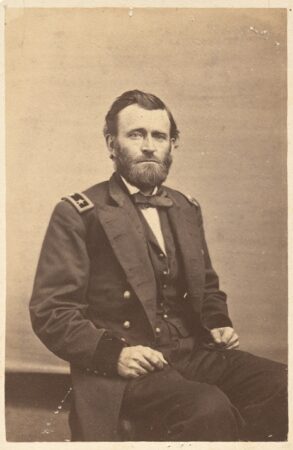
General Ulysses Grant

General Grant led early Union success in the Western Theater with his victories at Forts Henry and Donelson in Tennessee.  These early accomplishments earned Ulysses S. Grant the nickname “Unconditional Surrender” Grant.

Ulysses Simpson Grant / Barr & Young / Albumen silver print, c. 1862 / National Portrait Gallery, Smithsonian Institution

But as Grant’s and the Union’s confidence grew in Tennessee, so did the danger.  The Confederate army was less than three miles away from the Union lines on the eve of Shiloh, yet the Union was oblivious to the enemy presence.  Grant was caught completely by surprise at the start of battle, the relaxed army employed minimal defensive measures, his troops were routed and retreated in panic the first day, and the losses were horrific.

But Grant rallied and took control the second day. Like Johnston, he led from the front.  On the second day, Grant came under heavy fire, with a musket ball hitting his sword at his side.

Perhaps the single most important saving grace for Grant and the Union at Shiloh was the weather.  General Johnston wanted to commence the surprise attack two days prior to when it occurred.  But heavy rains slowed the advance of the Confederates and delayed the attack.  Those extra days allowed Grant’s reinforcements that were arriving to his position to creep steadily closer to where they were able to join the fight and decisively swing the momentum on the second day of battle.

Grant was heavily criticized by many in the North immediately after Shiloh, and he was prepared to resign or take a leave from the army.  But President Lincoln understood Grant offered up one characteristic no other Union general early in the war seemed to muster:  proactive aggressiveness.  When a newsman argued to Lincoln that Grant should be removed, the President’s alleged response was: “I can’t spare this man.  He fights.”

Shiloh was a near-death experience for both Grant’s body and career.  But having survived the disastrous first day and rebounding the second day to push back the Confederacy, Grant built upon his earlier Tennessee successes, learned a few valuable lessons that improved the Union’s prosecution of the war, and set Grant up for the success of Vicksburg and ultimate command of the entire Union army.

Shiloh offered Grant a rare combination of wake-up call and confidence builder.  He exited the battlefield more aggressive than ever in taking the war to the enemy but more diligent in preparation.  The fall of the South was set in those muddy woods in early April 1862.

Nathan Bedford Forrest

After the war, Robert E. Lee was asked to name the greatest soldier of the war.  His response: “A man I have never seen, sir.  His name is Forrest.”  Nathan Bedford Forrest, a native Tennessean, was both an impressive force of nature and highly despicable.

Nathan Bedford Forrest, ca. 1862-1865

He was a self-made, successful, and wealthy plantation owner; one of the few soldiers to start the Civil War as an enlisted private and end it as a general; a visionary that revolutionized cavalry tactics despite having no formal military training; and an intimidating adversary who struck fear across all levels of the Union ranks.

Yet Forrest was a slave trader before the war, likely allowed the massacre of hundreds of Union troops after their surrender at Fort Pillow, and served as the first Grand Wizard of the Ku Klux Klan after the war.

Like Johnston and Grant, Forrest exhibited extraordinary bravery in active combat early and often in the war.

Through the war, he reportedly killed thirty men in hand-to-hand combat and had twenty-nine of his horses shot out from under him in battle.  Prior to Shiloh, in the winter of 1862, he evaded Grant’s siege of Fort Donelson by leading a break-out and escape of 4,000 troops.

Forrest, an unknown colonel at the time of Shiloh, was assigned to guard the flank of the Confederate lines at the start of the battle.  But hearing the battle rage for hours and receiving no new orders, he decided to unilaterally commit his cavalry to the battle.  His men’s charge helped break the Union’s until-then impregnable Hornet’s Nest, and Forrest made it to the bluffs overlooking the Union’s panic on the banks of the Tennessee River that evening.  Forrest and his cavalry staked the high-water mark of the South at Shiloh.

Forrest commanded the rear guard of the Confederate retreat from Shiloh, during which he led a cavalry charge at a Union skirmish line and found himself alone and surrounded by Union soldiers.  He escaped by viscously fighting his way out with pistol and sword, but not before he was shot and nearly killed.[3] He was the last man injured at the Battle of Shiloh.

After Shiloh, Forrest was turned loose to wage a tactically fluid cavalry guerilla war in the Western Theater.  He achieved a major victory at Murfreesboro, wreaked havoc behind Grant’s lines during the siege of Vicksburg, and secured victory after victory in battles across the western half of the Confederacy.

If Forrest dies during the retreat from Shiloh, the Confederacy would likely have suffered a more rapid collapse in the Western Theater.  That could have accelerated the demise of the Confederacy before Appomattox.

That’s because Forrest was exactly the type of leader the outnumbered, outgunned, and outspent South desperately needed.  His tactical genius overcame and nullified the inferiority of numbers.  Despite usually being the smaller force, Forrest applied unconventional tactics to keep his larger foe constantly off balance and loathing what was to come next.

Forrest recruited, trained, and equipped (often with captured Union arms) his men well.  They loved him for it and faithfully performed whatever task he requested.  Legend has it Nathan Bedford Forrest was the only cavalryman Ulysses Grant feared. General William Tecumseh Sherman lamented that, “Forrest is the devil.”

Shelby Foote in Ken Burns’ Civil War documentary states that the Civil War produced two “authentic geniuses”: Abraham Lincoln and Nathan Bedford Forrest.  Interesting how the former epitomized the best of the human condition while the latter left much to be desired.

William Tecumseh Sherman

Sherman was the trusted subordinate of Grant as well as Grant’s polar opposite in demeanor and style.  Sherman was volatile, opinionated, and always in manic motion.  A general once described Sherman as, “a splendid piece of machinery with all the screws a little loose.”

Gen. William T. Sherman, ca. 1860 – 1865

In the early stages of the war prior to Shiloh, Sherman was disgusted with the performance of, and questioned the commitment of, volunteer Union troops.  At the same time, he admired the commitment the Confederacy displayed between citizens and army.  He feared the contrast between North and South could spell trouble, and his experience at Bull Run did little to change his mind.

At the start of Shiloh, Sherman failed to understand the size and proximity of the Confederates to his lines and was caught off guard when the battle commenced.  Yet Sherman saved the first day for the Union.

Constantly on the front lines that first day, he suffered bullet wounds to his hand and shoulder, had three horses shot out from under him, and his coat and hat were riddled with bullet holes.  But he calmly held the vulnerable right flank and prevented Grant’s army from being tossed back into the Tennessee River and destroyed.

Ironically, Sherman persevered and became a northern hero with the help of an inexperienced and volunteer army that struggled at times on the first day but that also fed off his aura.  The very thing Sherman questioned, the ability of a volunteer army of green non-professional soldiers, became the instrument he wielded so effectively.

The bond between Sherman and Grant strengthened after Shiloh and the seesaw battles in the Western Theater, from Vicksburg to Chattanooga, continued with the North slowly grinding with momentum.[4]  When Grant was promoted and headed east to lead the entire army, he placed Sherman in command of the west.

Sherman commenced to apply his version of total war, looking to crush the South’s economy and political will to fight.  He captured Atlanta and burned it to the ground.  That victory helped reelect Lincoln and silence northern proponents of making peace with the rebels.  Sherman then cut a path of economic devastation to the sea.  The South’s will to fight was shattered.

If one of those bullets that found Sherman’s hand, shoulder, coat, hat, or three horses had fatally wounded him, the Union would have suffered an irreplaceable loss.  Sherman saved the Union at Shiloh, bolstered Grant’s confidence, clinched the Western Theater, innovated the concept of total war, secured Lincoln’s reelection, reinforced northern resolve, and crushed southern morale.

Sherman fought at both the first (Bull Run) and last (Bentonville) battles of the Civil War.  Losing Sherman to the fates of war in April 1862 at Shiloh might very well have changed the duration and course of the Civil War.

Shiloh: Forgotten Yet Hotly Debated

George Washington Cable fittingly wrote, “The South never smiled again after Shiloh.”  The battle, which was a must-win for the South that failed to materialize, occupies a unique space in Civil War lore.

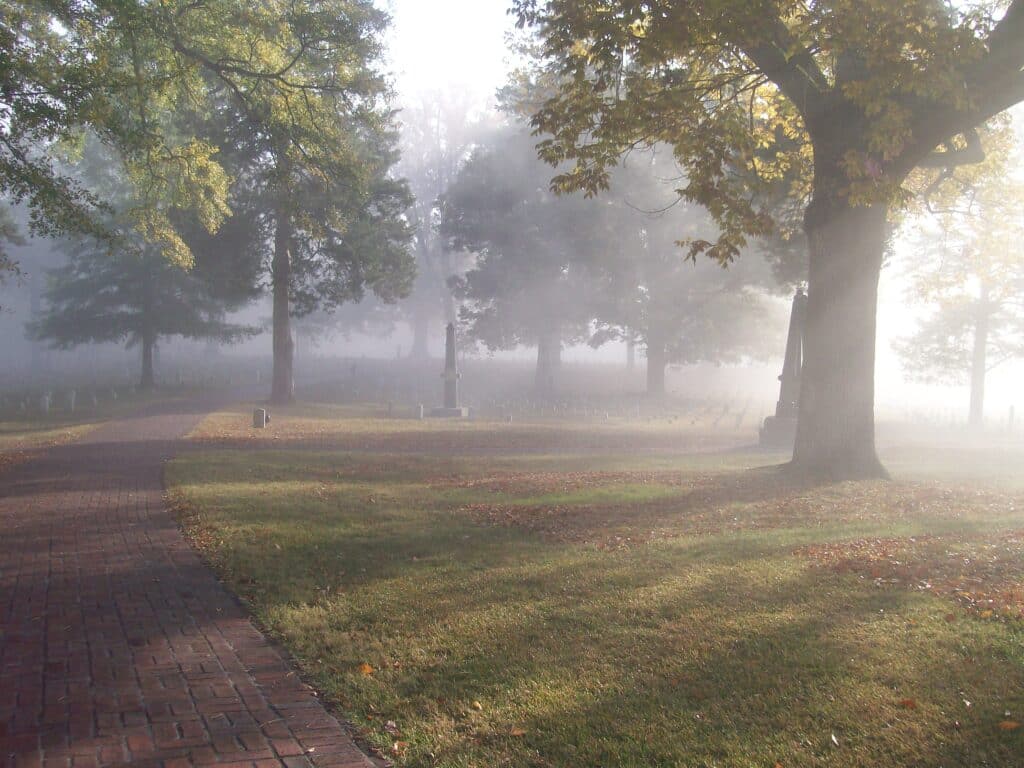
Early morning fog over Shiloh National Cemetery

On one hand, it is largely forgotten, ignored, or placed in the shadow of the more famous Eastern Theater battles.

But on the other hand, the debate over Shiloh rages on.  Years of serendipitous winding through an exploration of writings on the battle brought realization of an intense discourse between Civil War historians as to the heroes and villains for each side.  There is little consensus and passionate opposing views about the key moments of Shiloh as well as the performance and what-ifs of Johnston, Grant, Forrest, and Sherman.

Perhaps the most controversial is Albert Sidney Johnston.  There are noted historians that view him similarly to what I suggest: one of the best the Confederacy had to offer and an irreplaceable loss in the Western Theater.  Yet other accomplished historians view Johnston as incompetent and slow to act, and they offer decent rationale for such a view.

Ulysses Grant is also quite the controversial figure among historians, although it feels as if with the passage of time his legacy is better appreciated and placed in a more positive light.

There is much less controversy about the innovative brilliance of Forrest and Sherman.  But these two share criticisms from many regarding their approaches to war and, in the case of Forrest, decisions before, during, and after the war.

Read More

If you wish to head deeper down the historical rabbit hole of the Battle of Shiloh and its main actors, consider the following as both entertaining and enlightening resources:

Shiloh: The Battle that Changed the Civil War by Larry J. Daniel

Ripples of Battle by Victor Davis Hanson

American Ulysses by Ron White


[1] The casualties suffered at Shiloh exceeded the totals of the Revolutionary War, the War of 1812, and the Mexican War, combined!  A shocked North and South were soon to find out things could get much more deadly than Shiloh, as the battles of Antietam, Fredericksburg, Gettysburg, and Cold Harbor loomed in the future.
[2] When Johnston resigned from his federal position in California to join the Confederacy, the Union attempted to capture Johnston during his journey east.  Johnston evaded capture and ultimately made it to Richmond.
[3] Forrest was shot through the pelvis and the musket ball lodged near his spine.  A surgeon removed it a week later, without anesthesia.
[4] Legend has it that Sherman was the one who talked Grant out of resigning from the army or taking a leave of absence immediately after Shiloh.

The Ten Greatest NFL Defenses in the Super Bowl Era

I am a sucker for lists and rankings, despite many of them not being worth much. The more insightful top-whatever lists are ones where not just the ranking is offered, but the reasoning and advocacy behind the ranking. What were the criteria? How much were subjective factors weighed against objective ones? And so on.

I’ve seen more than a few lists ranking the greatest NFL defenses.  Most leave much to be desired and their formations have their fair share of holes.  So, it got me thinking about developing a more righteous top-10 defenses list.  One where the criteria are sound and (somewhat) consistently adhered to.

The ranking applies three key criteria: statistics, qualitative impact, and what contemporary players, coaches, and teams thought about the defense. Added bonuses for longevity/run and the cultural impact of the defense.  Only teams from the Super Bowl era, from 1966 on, are considered (apologies to the Halas-era Monsters of the Midway).

So here we go. The best ranking of the ten greatest defenses in NFL history, in ascending order.

Numbers 10 through 8 (in no particular order) – Miami Dolphins No Name Defense (1972), Seattle Seahawks Legion of Boom (2013), Tampa Bay Buccaneers (2002)

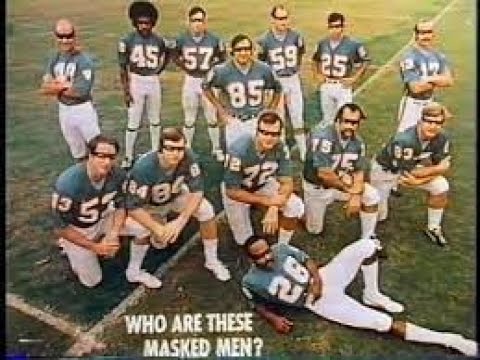
You can’t leave off this top-10 list the defense that led the only undefeated team in the Super Bowl era.  The 1972 Dolphins defense had a year for the ages despite a lack of star power (Coach Tom Landry came up with the ‘No Name’ moniker).  Nick Buoniconti is the best known of the No Namers, earning a bust in Canton.  But the most underrated was safety Dick Anderson.

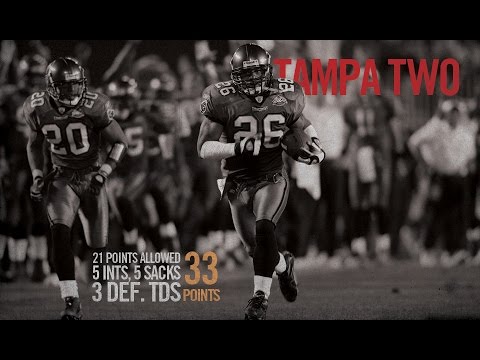
The 2002 Buccaneers’ defense might be the toughest against the pass since 2000.  Warren Sapp, Derrick Brooks, and John Lynch rightly served as the famous triumvirate.  But Ronde Barber, Shelton Quarles, and Simeon Rice were the unsung heroes.

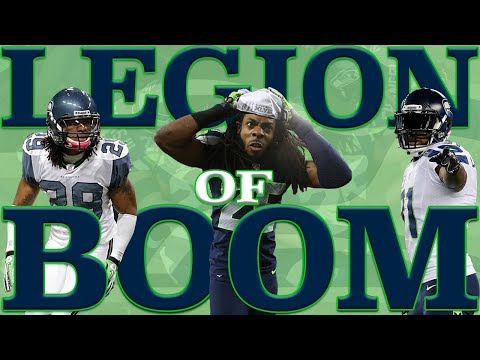
The 2013 Seattle Seahawks’ Legion of Boom was as hard-hitting and intimidating of a defense the NFL has had to offer post-2000.  Watching the Legion of Boom that year made you feel like you were transported to an earlier NFL era, one when defense ruled the roost.

#7 – New York Giants Big Blue Wrecking Crew – 1986-1990

The top defenses of the Super Bowl era must include the one with the greatest defensive player in the history of the NFL.

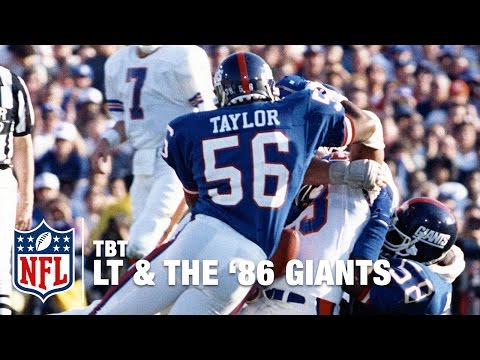
Lawrence Taylor was the catalyst for the G-men in the championship year of 1986, logging over 20 sacks.  There was nothing that could stop him, in 1986, 1990, or throughout his stellar career (except, perhaps, for himself).

Not that LT needed any help, but he certainly enjoyed it with Leonard Marshall’s sacks and Carl Banks’ tackles (over 110 in 1986).  Who can forget Jim Burt as the prototypical immovable nose tackle in the middle?  This defense was so good, people often forget about another Hall of Fame linebacker alongside LT, Harry Carson.

What I love most about the Big Blue Wrecking Crew was they dominated in an era stacked with great offensive talent.  In their 1986 playoff run to Super Bowl victory, they beat Joe Montana (the 49ers scored 3 points and Montana was knocked out of the game by Jim Burt), a stacked 12-4 Washington team (who the Giants shut out), and John Elway.  Their 1990 Super Bowl run saw the defense vanquish Montana and the 49ers again along with Jim Kelly in the famous ‘wide-right’ Super Bowl.

#6 – Dallas Cowboys Doomsday Defense I and II – 1966-1982

The mid-1960s to the early 1980s spans an eternity, as measured in football time.  Yet the Dallas Cowboys over that period fielded exemplary defenses that spanned multiple player generations.  And there were two versions of what came to be known as the Doomsday Defense.

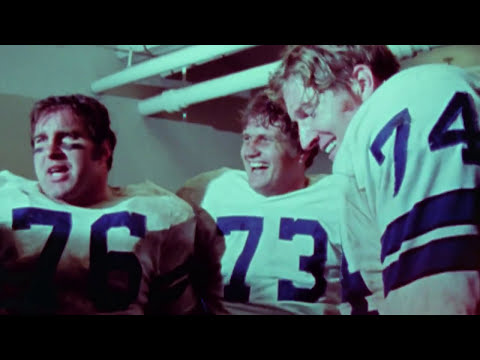
Doomsday I was built off the defensive line, with Larry Cole, Jethro Pugh, and the great Bob Lilly up front.  Leroy Jordan and Chuck Howley anchored the linebacker corps, and they were backed up by a trio of Hall of Famers in the secondary by the names of Mel Renfro, Herb Adderley, and Cliff Harris.

In the mid-1970s, with age catching up to the Doomsday I players, the Cowboys miraculously retooled on the fly to create a Doomsday II lineup that might have surpassed the first.  The duo of Harvey Martin and Randy ‘Manster’ White may be the best pair of defensive linemen in the history of the NFL. Throw in Ed ‘Too Tall’ Jones and that front line would scare any offense.

There is an interesting piece of trivia that illustrates how great this defense was over a long period of time.  The Doomsday Defenses sport three players who were named Super Bowl MVPs: Chuck Howley, Harvey Martin, and Randy White.

Many people despise the Cowboys—especially fans of opposing NFC East teams. But no matter your team affiliation, you must hand it to Coach Landry and the organization for their ability to consistently field one of the most dominant defenses in the league over that period.  The Doomsday Defense is the Cal Ripken of NFL defenses.  And it was the foundation of a storied franchise’s Super Bowl exploits.

The only knock on the Doomsday Defense is a 2-3 team record in five Super Bowl appearances during its reign.

#5 – Minnesota Vikings – 1968-1978

Consider a recipe that would terrify opposing offenses.  First, build a defensive line consisting of hall of famers Carl Eller and Alan Page along with perennial pro bowlers Jim Marshall and Gary Larsen (the only defensive line in NFL history that sent all four players to the pro bowl the same year).  Second, nickname the defensive line the Purple People Eaters.  Last, have the defensive unit adopt the motto ‘let’s meet at the quarterback.’

That powerful recipe delivered pain to offenses and four trips to the Super Bowl for the Vikings in the 1970s.  Although the Vikings were winless in their four trips to the big game, no one doubted what got them there: defense.  And the strength of the defense went deeper than the great line.  Paul Krause established his Hall of Fame credentials roaming the secondary through the late 1960s and 1970s.

In 1969, the Vikings defense yielded a meager 3.4 yards per snap. In 1975, the Vikings became the first team to lead the league in total defense, pass defense, and rush defense (that feat was accomplished again by another team coming up in our ranking).

The Vikings defense of that era earns praise from two guys who played against it and have busts in Canton, Ohio:  Johnny Unitas and Bart Starr.  Both claimed the Purple People Eaters were the best pass rushers they ever faced.  Enough said.

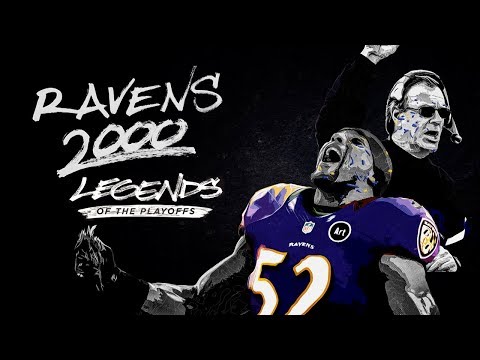
#4 – Baltimore Ravens – 2000

Ray Lewis is a polarizing personality to many, but there is no questioning his dominance, passion, commitment on the field, and what he meant to the Ravens in 2000.  It is rare to see an entire team take on the persona of its captain, especially one as intense as Lewis.  But the Ravens did just that over the course of Ray Lewis’ career.

His leadership of the defense led to pure statistical dominance in 2000: the defense set the NFL 16-game single-season records for fewest points allowed (165) and fewest rushing yards allowed (970).  But the most impressive statistics are found in the Ravens’ successful Super Bowl run that year: in four playoff games including the big one, the Ravens gave up a measly 23 points, and seven came from a kick return touchdown.  That level of defensive domination in the modern era is rare.

One minor point of consideration preventing the 2000 Ravens defense from moving higher in the rankings: their road to Super Bowl champions pitted them against opposing offensives led by mediocre quarterbacks.  Through the playoffs the Ravens defense went up against, in order: Gus Frerotte, Steve McNair, Rich Gannon (knocked out of the AFC Championship game)/Bobby Hoying (his replacement), and finally Kerry Collins in the Super Bowl.

But the impressive flipside to consider is that the Ravens defense carried the team to Super Bowl glory with Trent Dilfer at quarterback.

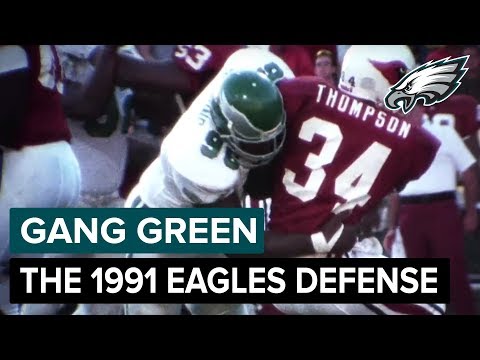
#3 Philadelphia Eagles Gang Green – 1991

Those not familiar with the Eagles defense in the early 1990s may see this and think it a mistake.  After all, the Eagles in ’91 went a good-but-not-great 10-6, Randall Cunningham suffered an ACL tear in the first game of the season, the Eagles’ resulting offense was horrible, and the team failed to make the playoffs.  But, my goodness, that defense was epic.

The center of gravity was Reverend Reggie White.  And he had a lot of help with Jerome Brown, Andre Waters, Seth Joyner, Wes Hopkins, and Clyde Simmons.  Joyner earned the Sports Illustrated NFL player-of-the-year award.

The most impressive stat for the 1991 Eagles defense was that six players tallied at least 100 tackles that year.  Less than four yards per snap were yielded by the defense, and completion percentage was an unreal 44%.  Opposing offenses scored four rushing touchdowns against the Eagles defense, for the entire season!

The 91 Eagles defense led the league in rushing yards allowed, passing yards allowed, and total yards allowed.  That’s what total, balanced domination on defense looks like on a stat line.

Eagles fans consider the 1991 unit to be Buddy Ryan’s defense despite his firing as head coach the year prior.  Rich Kotite, who will never be confused with Bill Belichick, enjoyed the dual benefits of Ryan’s personnel and Bud Carson as defensive coordinator (Carson was the architect of another famed defense coming up in our ranking).

Gang Green scores bonus points for going up against stellar offenses in their division six times that year: Dallas, Washington, and New York.  Add the concrete-like turf of old Veterans Stadium and you have the best defense of the 1990s and perhaps the past 35 years.

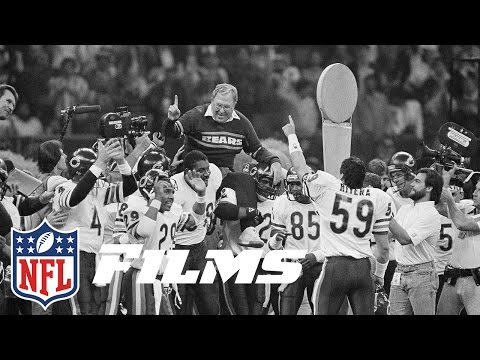
#2 Chicago Bears 46 Defense – 1985

This unit, which reset the standard for the vaunted Monsters of the Midway, posted the most dominant, impressive, and astounding single-season defense in NFL history.  Season average points-per-game of 12.4.  Allowed 10 points, cumulative, through three playoff wins.

But what I love about this defense was how innovation combined with attitude to produce the exceptional.

Buddy Ryan’s 46 Defense disrupted opposing offenses to the point where they became nonfunctioning.  And Ryan developed and slotted players that mirrored the 46’s designed aggression with manic yet focused styles of play.  Mike Singletary’s eyes and barely-contained rage are the best examples.

Culturally this Bears team was iconic, not just because of the Super Bowl Shuffle gimmick, but more importantly because of how this defense captured the nation’s attention as must-see.

Only two issues hold the ‘85 Bears from the top slot.  First, their dominance manifested in only one Super Bowl appearance.  Second, during that dominant 1985 playoff run, they faced Phil Simms on a frigid, frozen, and windy Solider Field and then two guys named Dieter Brock (at home again versus the Rams) and Tony Eason (in the Super Bowl versus the Patriots).

For more on Buddy Ryan’s 46 Defense, listen to episode 46 of The Far Middle.

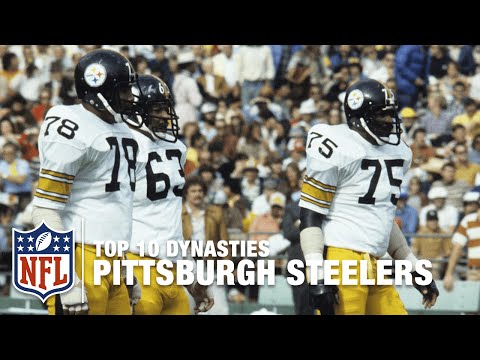
#1 – Pittsburgh Steelers Steel Curtain 1974-1979 

Steel Curtain: the iconic name says it all.

Love them or hate them, no team has ever done dominant defense better or for longer than the Pittsburgh Steelers in the 1970s.  Mean Joe Greene, probably the greatest Steeler ever, was the hall-of-fame anchor.  But when you add alongside and behind him four other hall-of-famers in Jack Lambert, Jack Ham, Mel Blount, and Donnie Shell, you set standards that have no comparison before or after.

The best annual version of the Steel Curtain during this run came in 1976, when they allowed only 9.9 points per game in the regular season.  That team did not make it to the Super Bowl due to both 1,000-yard rushers, Franco Harris and Rocky Bleier, being sidelined from injury against the Raiders in the AFC Championship.

This was the golden era of the NFL.

When the Steelers squared off against the Raiders, the Steel Curtain was lining up against Stabler, Biletnikoff, Casper, and three offensive line hall-of-famers in Otto, Shell, and Upshaw.  Strength against strength. Greatness against greatness.

Which brings up the primary reason why the Steel Curtain of the 1970s tops this list.

This defense won more (four Super Bowls), for longer (1973-1979), and against the stiffest of competition.  Ponder the opposition the Steelers had to vanquish to win four Super Bowls in this era:  Shula’s Dolphins, Madden’s Raiders, Bum’s Oilers, Grant’s Vikings, and Landry’s Cowboys.  That era and those teams could fill Canton on their own.

Nothing beats 1970s pro football, no team was better in the 1970s than the Steelers, and no defense in the Super Bowl era has yet to match the Steel Curtain.

When a Blinded 1930s Writer Saw the 2022 Future

Aldous Huxley, the English author, was blinded for nearly two years by infection when he was a teenager. Despite his ailment and lingering poor eyesight, Huxley managed to produce a dystopian classic with a precise vision that gazed ninety years into the future. His masterpiece, Brave New World, predicted with frightening accuracy modern society in the 21st century.

Huxley penned Brave New World in 1931 and published it in 1932, years before Orwell’s 1984. The dystopian worlds offered by each classic share similarities but also present sharp contrasts. Despite 1984’s rightful acclaim, one might argue Brave New World scores more direct hits when it comes to comparing its society to that of modern-day America.

Brave New World envisions a society run by a global bureaucracy that practices a kinder, gentler totalitarianism. There is a strict caste system of elite alphas at the top down through lowly epsilons at the bottom.  Humans are no longer born, but instead are manufactured, in labs with predetermined outcomes and castes.  Complex yet aimless entertainment and the drug soma are applied as tools to numb and train those in society to be passive and submissive.  God no longer exists, and everyone worships Henry Ford and makes the sign of the T.  Monogamy has been replaced with promiscuity.

A World of Parallels to Today

Seven eerily prescient parallels exist between Huxley’s Brave New World and today.

First, Huxley brilliantly illustrated how constant but hollow leisure in society does not lead to increased culture.  A popular saying in Brave New World is “never put off till tomorrow the fun you can have today.”  Games like obstacle golf are encouraged to the point of participation being a civic duty, and the games are designed to be complicated and constantly updated.   The complexity helps promote continuous and hollow consumption, so that people are kept busy by both playing the games and making the equipment to play the games with.  Self-cheating is encouraged.

The connections to today are striking.  Instant gratification prevails over long-term achievement.  Americans now have an obsession on consumerism with the constant acquiring of more stuff.  Consider the exponential growth in mindless entertainment such as VR and gaming.   And our everybody-gets-a-trophy/don’t-keep-score/cheat-until-caught culture.

Second, Brave New World informs us as to how science is the enemy of the totalitarian state when left unhindered and must be tightly controlled and distorted by the state so that it can become a useful instrument.

Science is a crucial piece of the strategy in keeping society in line, but scientific progress was purposely frozen with the advent of the world state.  Science and the muzzling control of it are the prices of stability.  Science propaganda is practiced at colleges, and one believes things because they were conditioned to believe them.  The culmination is science becomes a cook-book orthodoxy that is never challenged. The effort is managed by the state in a 60-story building that houses the Bureau of Propaganda and the College of Emotional Engineering.

The mirroring to today’s world is obvious.

Science has morphed into political science.  The scientific method has been replaced by scientific consensus.  We are told when the science is settled and are instructed to obey.  Questioners and dissenters of popular views or of accepted science in the university culture get labeled as heretics and deniers.  Although most literary critics interpret Brave New World to warn of the danger of science, I interpret something subtly but crucially different:  the danger of the state suppressing and commandeering science.

Third, Brave New World exposes the dangers of how the system can institutionalize class and solidify socio-economic barriers.   Mothers no longer give birth.  Instead, embryos are constructed in the lab and customized through chemistry to manufacture people at the desired caste level.  Effectively, children are decanted, from the privileged alphas down to the low-ranking epsilons.  Each person is molded by the hereditary and by the environment of the state-chosen caste.  Babies are not raised by parents but by State Conditioning Centers and are trained by crude Pavlovian methods to hate flowers and books.  The ideal society is described as having the proportion of an iceberg, where 1/9th sits at the top as elite alphas and the remaining 8/9ths are toiling below the water line.

Think about how much of this is present today.

Our public education system in major cities virtually guarantees students never realize their full potential.  Self-determination as to what one does in life is becoming an increasing rarity because of socio-economic obstacles. Science, math, and reading competency are not the focus of education these days. Instead, the exclusive focus is to deaden the minds of students and create a subservient collective that thinks what it is told to think and believes what it is told to believe.  The 1/9th of elites are the alphas above the water line, while the rest of society is kept struggling below the water line.

Fourth, Brave New World reminds us of the perils of loveless sex and promiscuity.  In Huxley’s society, “everyone belongs to everyone else.”  Sex is pursued exclusively for physical pleasure and the idea of a dedicated and committed relationship is viewed as savage.  The character Lenina (Huxley assigned character names in Brave New World to be plays on despots, scientists, politicians, and business leaders) gets lectured by her friend for not being promiscuous enough.  Children are taught “erotic play.”  Family, love, and monogamy are pornographic.  The word “mother” has become a crude obscenity, so profane that to speak it sparks revulsion.

The similarities to today are obvious.  Marriage and the family structure have never been under more duress.  Internet porn and lust have replaced personal intimacy and love.  Topics that not long ago were discussed in high school sex ed class are now covered in explicit detail in elementary schools.  We are learning that free love often ends up in less love.

Fifth, in Brave New World we see what awaits society in a drug culture. The miracle opiate is soma, and it is administered from cradle to grave, with euthanized death set by the state promptly at age 60.  Workers are paid in soma to feed their addiction.  Soma giveth by arresting the aging process, providing an emotional high, and softening depression during tough times or from harsh realities. But soma also taketh by acting as a poison that kills the person over years of use and eradicating individual thought and free will.

Huxley would be shocked at how the various modern versions of soma afflict Europe and America today.  Social media brings mass emotional addiction to children and adults.  Fentanyl, heroin, crack, alcohol, and marijuana are consumed legally and illegally to create physical additions that cross all socio-economic levels, as people seek escape from whatever haunts them.  Imagery of the physical ideal sets expectations at a young age, leading to more and more medical procedures and treatments to halt the natural aging process.

Sixth, Brave New World paints a society where the individual is erased into the collective and where free will and independent thought are vanquished by totalitarian domination.  Imagination and sense of self are dangers. Individual free thinkers who read the banned great works, from the Bible to Shakespeare, are savages of old civilization and are exiled to the wilds.  A popular slogan is “when the individual feels, the community reels.” Another one is “everyone works for everyone else.”  War is waged against the past, when individual rights were supreme.  To be happy, you don’t pick your path; instead you learn to enjoy the path that has been selected for you.

What an accurate portrayal Huxley foresaw of today’s political correctness.

Views of the state are constantly streamed to kids from all directions and across all mediums so that it conforms their minds.  There are parallels to today’s cancel culture, where you must tear down anything traditional that would make one think and challenge.  College syllabuses delete classic works and public square statues of prominent leaders are removed.  Dissenters are not simply ostracized but attacked by the Twitter mob.  And meritocracy, attacked as unfair, is replaced with the unethical injustice of equal outcomes.

Seventh and last, Brave New World demonstrates how such a dystopian society is a result of omnipotent and global totalitarian government.  The World State motto is “Community, Identity, Stability.”  A World Controller determines what information is allowed for public access and consumption, what science is acceptable, and what works are to be locked up and forbidden.  The state figured out that social conditioning was much more effective and lasting than brute force when looking to control a population.

These days, global organizations and accords make one wonder if we still live in a republican democracy.   The United Nations, World Health Organization, World Bank, and G-20 hold more sway over Americans’ pocketbooks, quality of life, freedoms, and decision-making than the U.S. Congress.  The faceless unelected bureaucrat buried within the administrative state holds more power than our elected president.  Domestic regulations and international accords take away more of our liberty in 2022 than any legislation or statute.

The Brave New World Outside Our Doors

In conclusion, Huxley provided a valuable service to the human condition.  He presented in stark contrast two very different views for the individual and society.  Consider two passages from Brave New World as illustrative of the contrast.

First, from the Director, who as representative of the state betrays a hatred for the individual: “The greater a man’s talents, the greater his power to lead astray.  Better for one to suffer than many be corrupted. Murder kills only the individual and what is the individual?  We can make more of them.  Unorthodoxy threatens more than the life of the individual, it strikes at society itself.”

Second, from John the outcast, who didn’t want comfort if it prohibited truth: “I don’t want comfort.  I want God, I want poetry, I want real danger, I want freedom, I want goodness. I want sin.”

Huxley, who passed away on the same day JFK was assassinated, warned us that before we start pining for such a brave new world, we should wait till we see it first.  My fear is the wait is over and it now sits outside our doors.