
The following is a summary of Nick Deiuliis’ introductory comments from CNX Resources’ Second Quarter 2022 Earnings Conference Call, held Thursday, July 28, 2022. Click here for more information.
Allow me to highlight three themes that are core to the CNX investment thesis:
- First, we built and now manage a low-risk, $700 million per year free cash flow annuity that works year after year. This helps to largely insulate us from macro events out of our control, it creates confidence and conviction in our business, and it is sustainable and works in any environment.
- Second, we then apply clinical math and, when the math dictates it, we allocate a significant portion of the free cash flow to reduce our share count at highly accretive rates of return, which will continue to deliver unprecedented free cash flow per share growth. That’s a tremendous opportunity for any value investor.
- Third, and lastly, in addition to our organic free cash flow annuity and our growing free cash flow per share, we are creating, demonstrating, and deploying new technologies which will create incremental free cash flow and free cash flow per share beyond our base business and plan. The new technologies opportunities are here and now and offer a meaningful avenue for incremental per share value for our shareholders and for the next chapter of Appalachia’s energy legacy.
We are excited by the opportunities in front of us – they are impressive, outside-the-box, and unique to CNX.
So with that bigger picture in mind, let’s talk specifics.
During our first quarter call, we covered the destructive, yet predictable consequences of current national and global energy policies. These policies have, unfortunately, been extremely effective in manufacturing energy scarcity and stoking inflation by preventing the most sensible supplies of natural gas and oil from reaching demand centers and by relying too quickly on renewable energy not yet at scale. The consequences are higher energy prices, energy scarcity and inflation, economic turmoil, and geo-political instability, and they are becoming painfully clear to all.
This morning, I would like to build on this discussion and talk about what CNX is doing to improve the current situation.
Perhaps it goes without saying, but I will say it anyway: CNX will continue to advocate for natural gas and the Appalachian region. The standard of living we all enjoy is owed in large part to the great men and women doing the hard work to provide our energy, and we are proud to be a part of that.
Tangible Actions, Leading the Charge
At CNX we focus on near term, tangible actions rather than hypothesizing as to what may or may not occur decades into the future. Opportunities exist here and now to advance environmental and socio-economic goals, and we are proud to be leading that charge with recent announcements like our work with Pittsburgh International Airport and with Newlight Technologies.
We have been hard at work driving these and other key initiatives forward to advance our view of a legitimate and actionable sustainable energy revolution. Improper planning and an inconsistent push toward the so-called energy transition, which is pinned to an irrational ideology that demands an immediate transition away from natural gas to renewable energy that will struggle to deliver at scale, is creating turmoil. A realistic and achievable sustainable energy revolution demands a more thoughtful, common sense, practical approach.
That means creating fact-based solutions grounded in math and science today, not hypothesizing about potential solutions 20 or 30 years from now. And by taking tangible steps to meaningfully reduce global carbon footprints in the most efficient manner. Natural gas, Appalachia, and CNX must play a pivotal role in accelerating and enabling this progress.
Natural gas is not a bridge fuel. I want to repeat that. Natural gas is not a bridge fuel. Instead, it is a catalyst fuel, which is the basis of the sustainable energy revolution by helping industries across sectors lower costs and emissions immediately. It will also fast-track the implementation of new technologies. This will allow companies and industries to focus on driving efficiencies to eliminate waste, stop egregious labor and human rights practices, grow the value proposition for their ownership, and provide a viable path to achieve carbon reduction targets.

Look, the concept of solar and wind powering the quality of life to which we have become accustomed sounds fantastic in theory and is romantic as advertised. But the ability of these technologies to satisfy the world’s energy needs is, to be kind, a highly questionable proposition. One that is only practically achievable decades into the future and that is highly dependent on major advancements in technology and a massive increase in rare earth element and battery production capacity, an order of magnitude more than currently exists today.
For perspective, the world currently produces roughly 600 exajoules of energy annually, which includes approximately 39 exajoules from renewable energies related to wind, solar, and geothermal. Said differently, only 6% of current energy production is derived from renewable energy despite decades of policy incentives and subsidies that cost nations, economies, and societies trillions of dollars. Twenty twenty-one was a record year for renewable energy installation, yet resulted in only 5 exajoules of renewable energy added to overall global energy production.

Now, on the consumption side, forecasts indicate that world energy demand will grow on average around 2% per year, which is approximately 10 to 12 exajoules per year. Renewable energy is unable to keep pace with that type of global energy demand growth, let alone have the ability to displace fossil fuels any time soon.
During the last 20 years, world energy demand has grown by roughly 200 exajoules, and over the same time approximately 35 exajoules of renewable energy capacity has been added. Renewables have a long way to go to simply meet new demand before they have any hope of displacing oil and coal in a meaningful way. More low-cost and environmentally-friendly Appalachian natural gas can help meet this growing demand and make progress now on environmental goals.
Also, of the 600 exajoules of world energy production, fossil fuels account for over 490 exajoules of that total, with hydro accounting for 40, nuclear adding 25 more, and then the 39 EJ of wind/solar renewables to get to approximately 600. A majority of fossil fuel production is oil and coal. Appalachian natural gas only accounts for approximately 12 exajoules, or roughly 2% of total global energy production, and represents the cleanest, lowest greenhouse gas intensive fossil fuel. Within Appalachia, CNX accounts for 0.5 exajoules and has the lowest GHG intensity and cost structure in the basin.
We Are the Solution
We, the Appalachian basin and CNX, are not the problem. Math and science show that we are the solution. CNX serves as a needed ally as the world seeks to reduce the other 490 exajoules of much higher GHG intensive fossil fuels and help keep pace with new energy demand.
There is also the issue of supply chain realities to consider.
CNX and Appalachia are closest to the major U.S. demand centers for energy, goods, and services, allowing our local energy to be even more greenhouse gas-efficient from an all-in, scopes 1-3, life cycle perspective. Reducing unnecessary shipping logistics is the elephant in the room when it comes to emissions.
Investment in, and utilization of, our low-greenhouse-gas-intensive natural gas and its derivative products will rely on infrastructure that works with new green technologies when and if they are ready and able to be deployed to meet future demand. This means that engines and factories can run off 100% compressed natural gas (CNG), 100% hydrogen, or related blends. The same logic applies to additional electric vehicle (EV) deployment, as natural gas turbines on the grid allow electrification to play a more meaningful role sooner.
CNX has been quite active making moves and investments with these broader policy realities in mind.
Our New Technologies team has numerous projects in various phases of development which will help the world move to a lower GHG emitting future, while also maintaining reliable energy resources for a properly functioning society.
The New Technologies team is commercializing technology that will produce low-carbon-footprint natural gas, derivative products, and associated environmental attributes. These technologies are a game changer for the natural gas extraction and transportation industries. Technology and assets from CNX can help displace higher carbon intensive fuels in the US energy mix, both on the power grid and in the transportation sector.
These displacement opportunities are over 100 billion cubic feet per day of natural gas opportunities in the U.S. alone. More products and services could be produced within the Appalachian region.
Think of these emerging technologies to be commercialized falling into one of three major buckets.
The first bucket consists of what we designate as having valuable and monetizable environmental attributes. We are capturing methane, through incremental capital investment and deployment of technology, which would have otherwise been vented into the atmosphere. This ultra-low carbon gas is increasingly valuable in a carbon constrained world. Our Virginia assets are the foundational piece of that effort for CNX. Coalbed methane (CBM) is back in a big way, but in a much different world. CBM today has a natural gas pricing base level of value, but also now enjoys an increasing portion of value tied to its ultra-low carbon characteristics. Recognition of this value is growing across numerous economies.
The second bucket is proprietary technology we developed that will fundamentally change the manufacturing process for the extraction and delivery of natural gas. The technology will transform drilling, completions, flow back, compression, processing, and so on. It will make these processes more efficient, reduce risk, lower emissions, and increase margins.
The third bucket is using in-house proprietary technology to disrupt various industries currently relying on other less-efficient and higher-emitting forms of energy. This technology efficiently transforms the state of natural gas from gaseous phase into CNG and LNG. That CNG and liquefied natural gas (LNG) on pad can transform the aviation and ground transportation industries. Instead of off-shore, high carbon footprint, high-cost gasoline for ground transportation, the ability exists to use local, low carbon footprint, low-cost CNG. It’s a similar story for aviation, with LNG replacing jet fuel.
The business case for this third bucket comes down to common sense. If we want to lower global GHG emissions, you deploy new renewable energy in the sunniest and windiest places that still rely on coal and oil, to displace them. You don’t place renewables at scale in places like Pennsylvania where the efficiencies are low, the costs at scale are high, the supply chains are thousands of miles in length, and the life cycle carbon footprints are going in the wrong direction.
What is better for the planet, for greenhouse gas emissions, for the regional economy, and for business models? Making products overseas using coal fired power and inefficient power plants and factories, that utilize poor labor practices, and having all that wasted cost and energy transporting these products all the way to America? To sometimes work, depending on weather? Or, simply manufacturing these products here with low carbon-footprint natural gas, more efficient power plants and factories, using local well-paid workers and shipping it within a one-day drive? Pretty simple.
Focused on Innovation, Positioned for Success
Now let’s talk about tangible, impactful, and local recent results of the New Technologies team across these three buckets. Our year so far has been full of accomplishment spanning all three.
A pathway for implementing our propriety technology to disrupt the old economy fuel supply mix is the announced partnership between CNX and the Pittsburgh International Airport. This is an exciting partnership for both parties. CNX will help PIT lower their costs, reduce emissions, and create jobs by using low carbon intensity natural gas to displace traditional aviation and transportation fuels. This fits squarely in our Tangible, Impactful, Local mantra.

This partnership centers on how CNX has developed proprietary technology to cost-effectively convert on-site dry natural gas into LNG, CNG, and electricity for various uses including as a hydrogen feedstock.
These technologies reduce emissions and operating costs at the airport. This partnership opens a new frontier for using lower-cost, lower-carbon-intensity LNG and CNG fueling depots for higher energy intensive businesses such as airlines, transit, cargo, fleet, and related businesses. These natural gas derivative products will leverage our local community’s workforce and create more family-sustaining jobs.
We also recently announced another exciting partnership, between CNX and Newlight Technologies, to convert air and greenhouse gas into a biomaterial called Aircarbon.

Aircarbon is a carbon negative PHB biomaterial produced by naturally occurring microorganisms that replaces plastic in industrial segments ranging from food to fashion. Under the agreement, CNX and Newlight will work together to capture waste methane from third party industrial activity that would typically be vented to the atmosphere. CNX will capture, gather, and process captured methane to remove impurities, compress, and deliver the methane through new and existing natural gas pipeline infrastructure for conversion into Aircarbon by Newlight.
This strategic partnership, with CNX capturing methane gas to support Newlight’s manufacturing needs, is expected to result in several manufacturing facilities in the Appalachian region and advance critical decarbonization goals while boosting our region’s economic activity, capital investment, and job growth.
Beyond our New Technologies team, we believe the Appalachian region has the resources, know-how, and work ethic to be the epicenter of providing solutions to the challenges brought by poor energy policy and weakened geopolitical standing.
We can be a center for skilled labor job creation to help pave a path to middle class access for the region’s underserved rural and urban communities, and we put into effect a program to do just that.
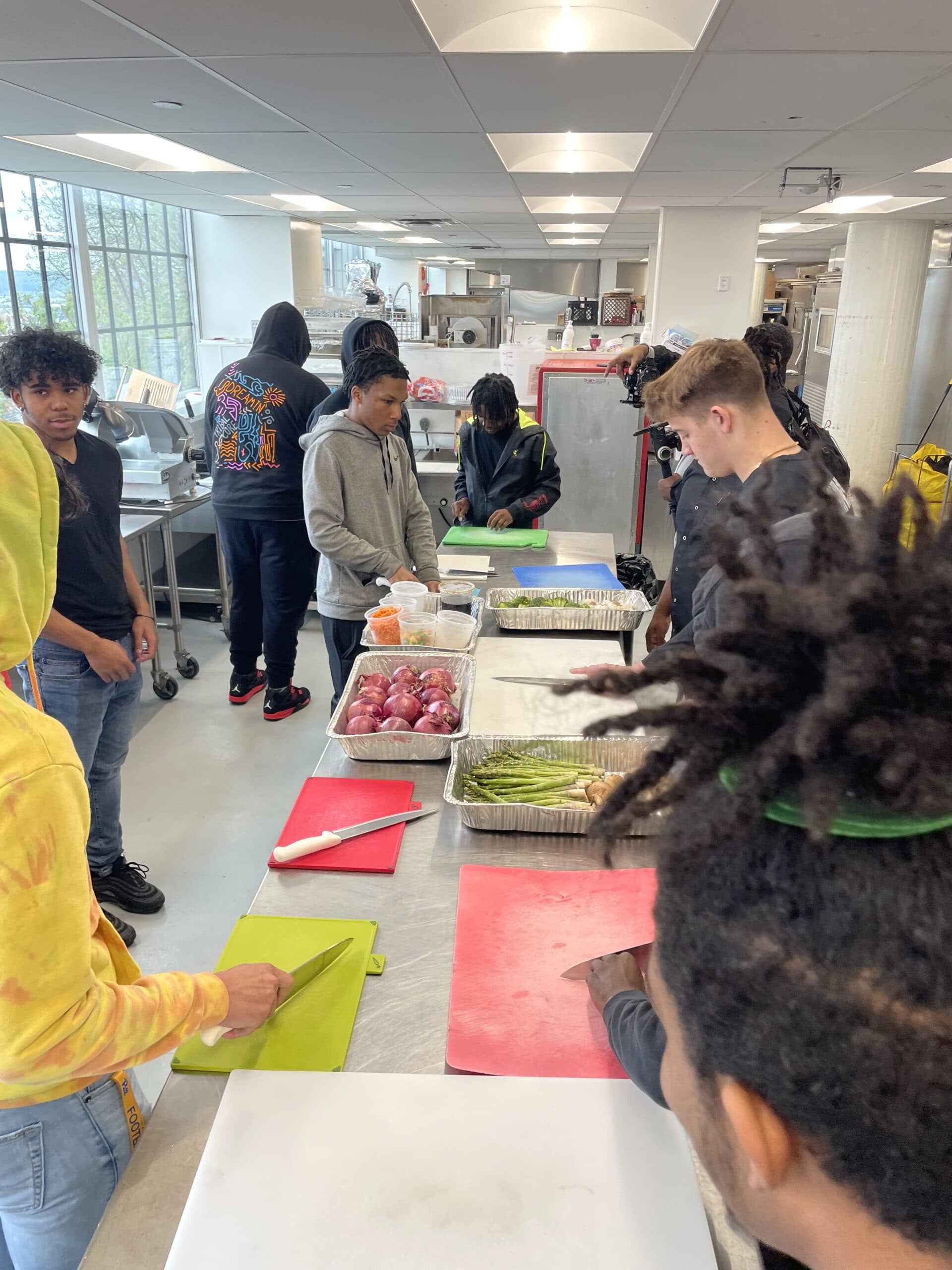
This quarter, we graduated our inaugural class from the CNX Mentorship Academy, which consisted of 28 young men and women from this great region’s urban and rural communities. Six of these talented individuals recently joined our team at CNX; this is something our entire team and I are very proud of. We expect the second-year class to be even larger. These young men and women will help us build our local energy ecosystem to cultivate and sustain the middle class for the next generation.
We also recently submitted comments to the U.S. Securities and Exchange Commission (SEC) regarding their proposed rules for climate disclosure. We are supportive of the SEC’s efforts but believe their proposed rules as drafted will create inconsistent and highly subjective standards for reporting Scopes 1, 2, and 3 carbon dioxide emissions across different industries and companies.
We believe in transparency and accuracy.
Our position is that the SEC should amend the rules to create greater standardization and clarity. Fully transparent and honest accounting of carbon emissions will underscore the importance of natural gas as the pathway to a promising future. We encourage you to read our letter to the SEC, which is posted to our website.
Conclusion
We believe that products and goods that we all use daily should be manufactured in Appalachia and first utilized in the U.S. to help our local citizens and economies. Similarly, let’s first focus on creating new and growing existing markets for our products regionally in Appalachia and nearby markets like the Northeast U.S. via short pipelines. A local first mentality will go a long way to solving myriad problems across the socio-economic and environmental spectrum. It’s not protectionism or anti-free trade. Instead, it’s common sense, rational, and free market-based.